1. Introduction: The Diabetes Epidemic in India
Adopting a clinically formulated diabetes friendly Indian diet is the cornerstone of reversing postprandial glucose surges and lowering HbA1c levels.
India is currently recognized as the diabetes capital of the world, with over 101 million individuals living with Type 2 Diabetes and an additional 136 million diagnosed with prediabetes. Unlike Western populations where diabetes predominantly correlates with higher Body Mass Index (BMI), South Asians exhibit the “Asian Indian Phenotype”—characterized by lower overall BMI, higher visceral abdominal adiposity, greater insulin resistance, and a genetic predisposition to beta-cell dysfunction.
Traditional Indian dietary habits, while rich in plant diversity, have progressively evolved over recent decades into highly refined, carbohydrate-dense meals. Polished white rice, refined wheat flour (maida), deep-fried snacks, and sugar-laden beverages contribute to chronic postprandial glucose surges.
However, Type 2 Diabetes is not an irreversible life sentence. Through targeted nutritional intervention, optimizing glycemic load, increasing muscle mass, and improving cellular insulin sensitivity, millions can significantly lower their HbA1c levels, reduce their dependency on pharmaceuticals, and in many cases achieve sustainable metabolic remission.
2. Understanding Blood Sugar Spikes & Insulin Resistance
When you consume carbohydrates, digestive enzymes break them down into glucose molecules, which enter the bloodstream. In response, the beta cells of your pancreas secrete insulin, a hormonal key that binds to cellular receptors, allowing glucose to enter skeletal muscle, liver, and fat cells for energy storage.
High Refined Carb Meal ➔ Rapid Glucose Influx ➔ Hyperinsulinemia ➔ Receptor Desensitization ➔ Elevated Fasting Blood Sugar & Triglycerides
The Insulin Resistance Cycle
When carbohydrate consumption consistently overwhelms metabolic capacity, cells down-regulate their insulin receptors to protect themselves against toxic intracellular substrate accumulation.
1. Hyperinsulinemia: The pancreas compensates by producing exponentially higher amounts of insulin to force glucose into resistant cells.
2. Impaired Lipolysis: Chronically elevated insulin turns off hormone-sensitive lipase (HSL), halting the body’s ability to burn body fat.
3. Hepatic De Novo Lipogenesis: Excess circulating glucose is transported to the liver, where it converts into triglycerides, driving Non-Alcoholic Fatty Liver Disease (NAFLD) and visceral abdominal obesity.
Controlling blood glucose is therefore not merely about avoiding refined table sugar; it requires minimizing the overall glycemic velocity and insulin demand of each meal.
3. The Glycemic Index (GI) & Glycemic Load (GL) of Indian Staples
The Glycemic Index (GI) ranks carbohydrates on a scale of 0 to 100 based on how rapidly they raise blood glucose compared to pure glucose (GI = 100).
* Low GI: 55 or less
* Medium GI: 56 to 69
* High GI: 70 or above
However, GI only tells half the story. The Glycemic Load (GL) factors in the actual portion size of available carbohydrates in a typical serving:
$$\text{Glycemic Load (GL)} = \frac{\text{GI} \times \text{Net Carbs (g)}}{100}$$
| Indian Staple Food | Serving Size | Glycemic Index (GI) | Glycemic Load (GL) | Clinical Recommendation |
|---|---|---|---|---|
| White Jasmine/Sona Masoori Rice | 1 Cooked Cup (150g) | 72–80 (High) | 28 (High) | Avoid or strictly limit to 1/2 cup combined with fiber |
| Parboiled / Basmati Rice | 1 Cooked Cup (150g) | 58–60 (Medium) | 22 (Moderate) | Prefer parboiled; pair with vinegar and ghee |
| Refined Wheat Naan / Bhatura | 1 Piece (90g) | 82 (High) | 33 (Very High) | Strictly avoid |
| Whole Wheat Atta Roti | 1 Medium Roti (35g) | 62 (Medium) | 12 (Moderate) | Combine with chickpea (besan) or almond flour |
| Pearl Millet (Bajra) Roti | 1 Medium Roti (40g) | 54 (Low) | 9 (Low) | Excellent winter staple; rich in magnesium |
| Finger Millet (Ragi) Mudde | 1 Serving (100g) | 68 (Medium-High) | 16 (Moderate) | Consume in moderation; balance with high protein |
| Moong Dal / Green Gram | 1 Cooked Cup (150g) | 38 (Low) | 7 (Low) | Outstanding blood sugar stabilizer |
| Chana Dal / Bengal Gram | 1 Cooked Cup (150g) | 32 (Low) | 6 (Low) | Lowest GI pulse; superior satiety index |
| Potatoes / Aloo Curry | 100g | 78 (High) | 16 (Moderate) | Replace with cauliflower, bottle gourd, or raw banana |
4. Smart Carbohydrate Swaps for Indian Kitchens
You do not need to give up traditional Indian flavors to achieve pristine glycemic control. Strategic ingredient substitutions can instantly cut the glycemic impact of traditional recipes by 50% or more:
- The Roti Upgrade:
- Traditional: 100% fine whole wheat flour (Chakki atta).
- Optimized Swap: 60% Whole Wheat or Jowar + 20% Besan (Bengal Gram Flour) + 10% Defatted Soya Flour + 10% Psyllium Husk (Isabgol). This drops the GI, triples the soluble fiber, and stabilizes postprandial glucose curves.
- The Rice Strategy (The Retrogradation Method):
- If you consume rice, cook it with 1 teaspoon of virgin coconut oil or cow ghee.
- Cool it in the refrigerator at 4°C for 12–24 hours before gentle reheating.
- Mechanism: Cooling recrystallizes amylose starch into Type 3 Resistant Starch (RS3). Resistant starch bypasses enzymatic breakdown in the small intestine, feeding beneficial bifidobacteria in the colon and reducing blood sugar elevation by up to 25%.
- Flourless Batter for Idli & Dosa:
- Traditional 3:1 White Rice to Urad Dal batters provoke high glycemic spikes.
- Optimized Swap: Substitute white rice with Sprouted Green Moong, Black Gram Dal, or Barnyard Millet (Kuthiraivali).
5. The Power of Protein, Fiber, and Healthy Fats
The physiological response to a meal is determined by its macronutrient matrix. When carbohydrates are ingested in isolation, gastric emptying is rapid, causing high blood sugar spikes followed by reactive hypoglycemia and hunger.
The Satiety & Glucose Shield:
Carbohydrates + Viscous Soluble Fiber + High-Quality Protein + Monounsaturated Fats = Stable Glycemic Plateau
1. Soluble & Insoluble Fiber as a Physical Barrier
Viscous fibers—such as beta-glucan in barley, glucomannan, and fenugreek galactomannan—form a thick gel within the lumen of the small intestine. This gel creates an unstirred water layer that physically impedes alpha-amylase and alpha-glucosidase from rapidly cleaving starch into glucose.
2. Protein-Mediated GLP-1 and PYY Secretion
Dietary protein from paneer, tofu, legumes, fish, and eggs stimulates the L-cells in the ileum to release Glucagon-Like Peptide-1 (GLP-1) and Peptide YY (PYY). GLP-1 slows gastric emptying rate, enhances glucose-dependent insulin secretion, and suppresses inappropriate post-meal glucagon output.
3. Healthy Fats Blunt Glucose Surges
Cold-pressed mustard oil, desi cow ghee (in moderation), virgin olive oil, and raw unroasted nuts provide essential fatty acids that delay pyloric valve opening, ensuring nutrients enter the bloodstream gradually.
6. 7-Day Diabetes Friendly Indian Diet Meal Plan for Blood Sugar Control
This weekly blueprint provides balanced macronutrients (~1,500–1,650 kcal, 75–90g protein, 40–50g fiber) designed to prevent glycemic variability.
Monday
- Early Morning (7:00 AM): 1 Glass of warm water with 1 tbsp soaked methi (fenugreek) seeds + 5 soaked almonds.
- Breakfast (8:30 AM): Besan & Sprouted Moong Chilla (2 medium) packed with grated paneer, spinach, and mint-coriander chutney.
- Mid-Morning (11:00 AM): 1 Cup of fresh tender cucumber slices sprinkled with roasted cumin and lemon juice.
- Lunch (1:30 PM): 1 Bowl of Mixed Vegetable Salad with olive oil dressing + 1.5 Jowar (Sorghum) Roti + 1 Bowl Chana Dal + 1 Bowl Palak Bhindi Sabzi + 100g Fresh Curd.
- Evening Snack (5:00 PM): Green Tea or Black Coffee + 1 Small Bowl Roasted Phool Makhana (Foxnuts).
- Dinner (8:00 PM): Grilled Herb Paneer or Tofu Steaks (150g) tossed with bell peppers, broccoli, and French beans.
Tuesday
- Early Morning: Cinnamon-infused warm water + 2 whole walnuts.
- Breakfast: Vegetable Daliya (cracked wheat) cooked with abundant beans, carrots, and roasted peanuts, topped with 2 boiled eggs or sauteed tofu.
- Mid-Morning: 1 Glass of fresh thin spiced buttermilk (Chaas) with crushed ginger and curry leaves.
- Lunch: 1 Cup Boiled Sprouted Bean Chaat with onions and tomatoes + 1 Whole Grain Multigrain Roti + 1 Bowl Baingan Bharta + 1 Bowl Dal Tadka.
- Evening Snack: Roasted Bengal Gram (Chana) + Handful of pumpkin seeds.
- Dinner: 1 Large Bowl of High-Protein Clear Chicken or Soya Chunk Vegetable Soup + 1 Steamed Bajra Methi Roti.
Wednesday
- Early Morning: Soaked Chia Seed water (1 tbsp chia seeds in 300ml warm water with squeeze of lime).
- Breakfast: Sprouted Green Moong Dal Idlis (3 small) with Coconut-Tomato Chutney (no added sugar).
- Mid-Morning: 1 Small Guava or Green Apple (low GI fruits with peel).
- Lunch: 1/2 Cup Cold-Retrograded Brown/Parboiled Basmati Rice + 1 Large Bowl of Rajma (Kidney Beans) cooked in cold-pressed mustard oil + Steamed Cabbage-Peas Sabzi + Onion-Cucumber Raita.
- Evening Snack: Cup of Masala Chai with no dairy milk or with almond milk (unsweetened) + Flaxseed Crackers.
- Dinner: Paneer / Mushroom Tikka skewers with grilled onions, capsicum, and 1 Small Bajra Roti with green mint raita.
Thursday
- Early Morning: 1 Cup Warm Cumin & Coriander seed infusion.
- Breakfast: Scrambled Eggs (3 whites, 1 yolk) or Masala Tofu Bhurji cooked with tomatoes and green chilies + 1 slice of 100% Sprouted Grain Toast.
- Mid-Morning: Handful of raw roasted sunflower seeds and 1 Brazilian nut.
- Lunch: 2 Methi-Missi Rotis (Chickpea + Wheat flour with fresh fenugreek leaves) + 1 Bowl Yellow Moong Dal + 1 Bowl Lauki (Bottle Gourd) Sabzi + 100g A2 curd.
- Evening Snack: Lemon-spiced boiled edamame or black chana chaat.
- Dinner: Fish Curry (Pomfret or Rohu in tomato-mustard gravy) or Soya Bean Curry with a side of steamed cauliflower-rice mash.
Friday
- Early Morning: Fenugreek seed water + 5 soaked almonds.
- Breakfast: Steamed Vegetable Oats Upma made with Steel-Cut Oats (not instant rolled oats), green peas, carrots, and peanuts.
- Mid-Morning: 1 Bowl of Thin Tomato-Garlic Soup with black pepper.
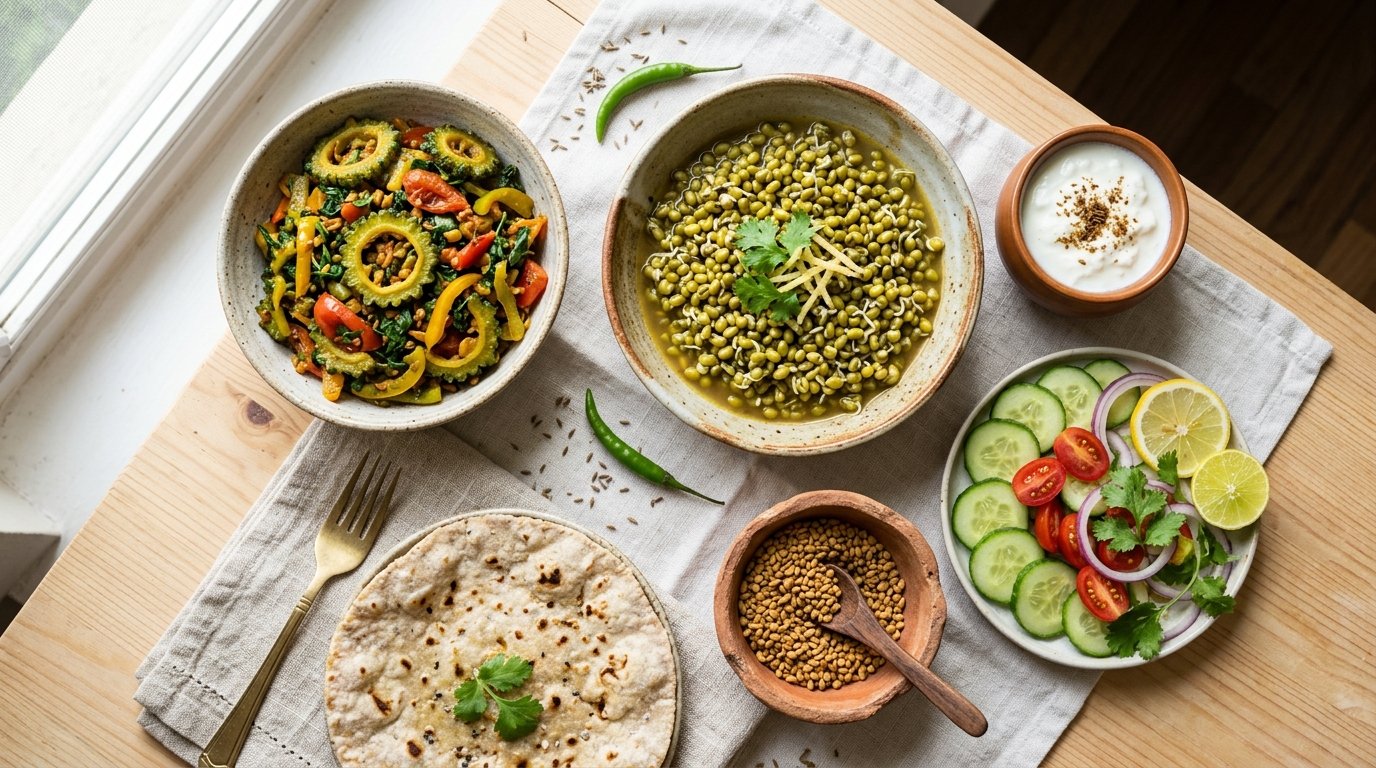
- Lunch: Large green salad bowl + 1 Bowl Masoor Dal (Red Lentil) + 1.5 Jowar-Bajra mixed Roti + 1 Bowl Stir-Fried Karela (Bitter Gourd) Sabzi.
- Evening Snack: Roasted watermelon seeds + Green tea.
- Dinner: Soya Chunk & Vegetable Khichdi made with 70% Green Moong Dal and 30% Brown Rice, cooked with 1 tsp A2 Desi Cow Ghee.
Saturday
- Early Morning: Cinnamon stick soaked water + 2 whole walnuts.
- Breakfast: Paneer Stuffed Ragi Cheela (1 large) served with unsweetened Greek yogurt and flaxseed powder.
- Mid-Morning: Fresh Celery & Cucumber cold-pressed juice with lime (no strained fiber).
- Lunch: 1 Big Bowl Sprouted Lobia (Black-eyed peas) curry + 1 Multigrain Roti + 1 Bowl Methi Aloo (predominantly methi leaves) + Cucumber Raita.
- Evening Snack: Roasted Makhana with turmeric and pink Himalayan salt.
- Dinner: Baked Herb Chicken Breast or Grilled Paneer Blocks with sauteed zucchini, asparagus, and button mushrooms.
Sunday
- Early Morning: 1 Glass warm water with 1 tbsp Apple Cider Vinegar (with mother).
- Breakfast: Moong Dal Paddu / Paniyaram (made with fermented green moong batter) + Tomato Garlic Chutney.
- Mid-Morning: Half a medium Pomegranate (high antioxidant punicalagins).
- Lunch: Sunday Family Thali: 1 Bowl Green Salad + 1 Cup Dal Makhani (cooked without heavy cream; using milk and cumin) + 1.5 Jowar Rotis + Bhindi Masala + Fresh Curd.
- Evening Snack: Spiced Lemon Black Tea + Boiled Peanuts.
- Dinner: High-Protein Vegetable & Tofu Stir-Fry with toasted sesame seeds and cold-pressed sesame oil.
7. Targeted Spices and Herbs with Proven Antidiabetic Action
Traditional Indian cooking relies on botanicals that possess clinical evidence for modulating glucose metabolism:
Botanical Glycemic Regulators:
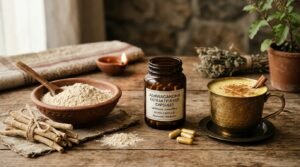
Fenugreek (4-hydroxyisoleucine) | Ceylon Cinnamon (MHCP) | Turmeric (Curcumin) | Bitter Gourd (Charantin & Polypeptide-p)
- Fenugreek (Methi Seeds):
- Mechanism: Contains the unique free amino acid 4-hydroxyisoleucine, which directly stimulates glucose-dependent insulin secretion from pancreatic islet cells. High galactomannan content slows intestinal glucose absorption.
- Dosage: Soak 10g of whole seeds in 150ml water overnight; consume both water and chewed seeds before breakfast.
- True Ceylon Cinnamon (Dalchini):
- Mechanism: Methylhydroxychalcone polymers (MHCP) act as insulin mimetics, stimulating cellular glucose uptake through GLUT4 translocation and inhibiting glycogen synthase kinase-3beta.
- Caution: Always use true Ceylon cinnamon (Cinnamomum verum) rather than Cassia cinnamon (Cinnamomum cassia), which contains high concentrations of hepatotoxic coumarin.
- Turmeric (Haldi) with Black Pepper:
- Mechanism: Curcumin suppresses inflammatory cytokines (TNF-alpha, IL-6) that degrade insulin receptor sensitivity in skeletal muscle tissue. Combining with piperine (black pepper) elevates curcumin bioavailability by 2,000%.
- Bitter Gourd (Karela):
- Mechanism: Contains three active anti-hyperglycemic constituents: charantin, vicine, and polypeptide-p (an insulin-like polypeptide that mimics endogenous insulin action in peripheral tissues).
8. Daily Lifestyle Protocols: Walking, Sleep, and Stress
Nutritional adjustments perform optimally when supported by non-pharmacological lifestyle interventions:
1. The 15-Minute Post-Meal Walk (Soleus Muscle Pushups)
- The Science: The largest glucose sinks in the human body are the large skeletal muscles of the lower extremities. Walking at an easy-to-moderate pace for 15 minutes immediately following your two largest meals activates non-insulin-mediated glucose uptake via the AMPK-GLUT4 pathway.
- Impact: Postprandial glucose excursions are suppressed by 18% to 30% compared to remaining sedentary.
2. Sleep Architecture and Dawn Phenomenon
- Chronic sleep restriction (< 6 hours nightly) elevates evening cortisol, stimulates sympathetic nervous system tone, and suppresses nocturnal growth hormone secretion.
- This aggravates the Dawn Phenomenon, an early morning liver glucose dumping mediated by nocturnal growth hormone and cortisol surge. Aim for 7 to 8.5 hours of uninterrupted sleep in a completely dark, cool room (18–21°C).
3. Chrononutrition & Meal Timing
- Insulin sensitivity peaks in the biological morning and deteriorates in the late evening.
- Consuming heavy carbohydrate meals after 8:30 PM forces the pancreas to secrete insulin against natural circadian melatonin signaling, resulting in elevated nocturnal fasting glucose. Keep dinners light, protein-forward, and complete your final bite at least 3 hours prior to sleep.
9. Common Diabetes Diet Myths Busted
- Myth 1: “Diabetics must eliminate all fruits entirely.”
- Fact: Whole fruits packed with soluble pectin fiber, polyphenols, and water (e.g., berries, guavas, green apples, cherries) have low glycemic loads. However, fruit juices, dried fruits (dates, raisins), and canned fruits should be strictly avoided.
- Myth 2: “Jaggery (Gud) and Honey are safe sugar substitutes for diabetics.”
- Fact: Chemical analysis reveals that jaggery is 70–85% sucrose and pure honey is 80% fructose and glucose. Both raise blood sugar and glycated hemoglobin with similar metabolic rapidity to white table sugar.
- Myth 3: “Eating fat causes diabetes; diabetics should follow a zero-fat diet.”
- Fact: Fat does not directly spike blood sugar or stimulate insulin secretion. In fact, essential fatty acids (such as Omega-3s and monounsaturated oleic acid) improve cellular membrane fluidity and insulin receptor responsiveness.
10. Frequently Asked Questions (FAQs)
Can Type 2 Diabetes be reversed through an Indian diet?
Clinical trials (such as the landmark DiRECT study) demonstrate that significant weight loss (10–15% of total body weight) coupled with a low-glycemic, calorie-appropriate diet can deplete ectopic fat stores in the liver and pancreas, allowing beta-cells to recover their capacity to produce insulin naturally and bringing HbA1c below 6.5% without medications.
What is the ideal HbA1c target for diabetic adults?
For most non-pregnant adults with Type 2 Diabetes, the general target established by the American Diabetes Association (ADA) and the Research Society for the Study of Diabetes in India (RSSDI) is an HbA1c below 7.0% (53 mmol/mol). For younger individuals or early-stage diabetes, tighter targets of < 6.5% are recommended if achievable without hypoglycemia.
Is curd (dahi) safe for diabetes?
Yes. Unsweetened whole-milk or toned-milk curd contains probiotics that improve gut microbiome health, lactic acid that slightly lowers stomach pH to slow digestion, and quality casein protein. Avoid sweetened flavored yogurts or commercial fruit curds.
How many rotis can a diabetic eat in a single meal?
Portion control is highly individual and depends on total daily energy requirements, physical activity level, and body weight. As a baseline guideline, 1 to 2 medium-sized rotis (made from high-fiber multigrain flours like Jowar, Bajra, or Besan-blend) paired with large volumes of green vegetables and dal provide optimal glycemic load.
11. Scientific References & Clinical Disclaimer
- Anjana, R. M., et al. (2023). “Metabolic non-communicable disease health report in India: the ICMR-INDIAB national cross-sectional study.” The Lancet Diabetes & Endocrinology, 11(7), 474-489.
- Lean, M. E., et al. (2018). “Primary care-led weight management for remission of type 2 diabetes (DiRECT): an open-label, cluster-randomised trial.” The Lancet, 391(10120), 541-551.
- Jenkins, D. J., et al. (2002). “Glycemic index: overview of implications in health and disease.” The American Journal of Clinical Nutrition, 76(1), 266S-273S.
- Mohan, V., et al. (2010). “Epidemiology of type 2 diabetes: Indian scenario.” Indian Journal of Medical Research, 132(5), 578-597.
Medical Disclaimer: The information presented in this article is designed solely for educational, informational, and general dietary reference purposes. It is not intended to serve as a substitute for individualized clinical medical advice, laboratory diagnosis, or pharmaceutical prescription. Individuals taking oral hypoglycemic medications (such as Metformin, Sulfonylureas) or exogenous insulin therapy must consult their diabetologist or endocrinologist before making rapid dietary changes to prevent life-threatening hypoglycemic events.