1. Introduction: Understanding the PCOS Epidemic in India
Following a structured PCOS diet plan Indian protocol is the single most effective therapeutic intervention to combat ovarian androgen excess and reverse metabolic resistance.
Polycystic Ovary Syndrome (PCOS) is one of the most widespread endocrine disorders among reproductive-age women globally, but in India, the prevalence is alarming. Studies indicate that nearly one in five Indian women (16–22%) suffers from PCOS, frequently complicated by metabolic syndrome, subfertility, and mental health challenges.
Unlike occasional menstrual irregularities, PCOS is fundamentally a whole-body metabolic disorder with reproductive manifestations. Traditional approaches that simply prescribe oral contraceptive pills often mask symptoms without addressing the underlying driver: cellular insulin resistance, systemic low-grade inflammation, and androgen excess.
Through structured, culturally tailored nutrition, women can restore regular ovulatory cycles, clear hormonal acne, eliminate hirsutism (excess facial and body hair), and achieve sustainable fat loss without extreme dietary deprivation.
2. PCOS vs PCOD: Pathophysiology and Key Differences
While frequently used interchangeably in common conversation, PCOD and PCOS represent distinct conditions along the same spectrum:
| Clinical Feature | Polycystic Ovarian Disease (PCOD) | Polycystic Ovary Syndrome (PCOS) |
|---|---|---|
| Nature of Condition | Anatomical condition of the ovaries producing immature eggs | Complex metabolic and endocrine syndrome |
| Hormonal Disruption | Mild to moderate imbalance | Severe androgen excess (testosterone, DHEA-S) |
| Insulin Resistance | Present in ~30–40% of cases | Present in 70–80% of cases |
| Fertility Impact | Usually responsive to lifestyle changes and ovulation induction | May require comprehensive hormonal and metabolic management |
| Long-Term Risks | Minimal systemic complications | High risk of Type 2 Diabetes, cardiovascular disease, endometrial hyperplasia |
| Prevalence | More common; affects ~30% of women | Affects ~10–20% of women |
3. The Core Triggers: Insulin Resistance, Androgens & Chronic Inflammation
To effectively resolve PCOS symptoms, one must understand the hormonal feedback loop that drives the condition:
Hyperinsulinemia (Excess Insulin) ➔ Stimulates Ovarian Theca Cells ➔ Excess Testosterone Production ➔ Follicular Arrest & Anovulation ➔ Symptoms (Hirsutism, Acne, Irregular Cycles, Stubborn Abdominal Fat)
1. Insulin Resistance: The Primary Engine
Between 70% and 80% of women with PCOS exhibit cellular insulin resistance, regardless of their body weight. Excess circulating insulin acts directly on the theca cells of the ovaries, synergizing with Luteinizing Hormone (LH) to overproduce testosterone and androstenedione. Simultaneously, high insulin suppresses Sex Hormone-Binding Globulin (SHBG) synthesis in the liver, increasing free, active androgens in the bloodstream.
2. Chronic Low-Grade Systemic Inflammation
Elevated inflammatory markers (high-sensitivity C-reactive protein, IL-6, TNF-alpha) are commonly observed in PCOS patients. Inflammation stimulates ovarian androgen production, impairs follicular maturation, and damages cellular insulin receptors.
3. Elevated Cortisol and Adrenal Stress
High psychological stress, chronic sleep deprivation, and extreme calorie restriction stimulate the adrenal glands to overproduce cortisol and DHEA-S (dehydroepiandrosterone sulfate), triggering “Adrenal PCOS” which resists standard dietary interventions.
4. Foods to Prioritize: Anti-Inflammatory Indian Superfoods
A PCOS-optimizing Indian diet focuses on whole, unprocessed, nutrient-dense foods that lower insulin demand and support liver detoxification:
- Complex, Slow-Digesting Starches:
- Sorghum (Jowar), Pearl Millet (Bajra), Barnyard Millet, and Sprouted Legumes (Moong, Chana, Rajma).
- These provide steady glucose release, preventing the acute insulin surges that provoke testosterone release.
- Cruciferous Vegetables for Estrogen Detoxification:
- Broccoli, cauliflower, cabbage, radishes, and mustard greens contain Diindolylmethane (DIM) and Indole-3-Carbinol (I3C).
- These compounds support Phase I and Phase II liver pathways, promoting the conversion of potent estradiol into protective 2-hydroxyestrone metabolites rather than inflammatory 16-hydroxyestrone.
- Omega-3 Rich Fats for Androgen Lowering:
- Flaxseeds (Alsi), chia seeds, walnuts, and wild-caught fatty fish (mackerel, sardines) lower high-sensitivity CRP, reduce circulating free testosterone, and improve menstrual cycle regularity.
- Bioavailable Plant & Animal Proteins:
- Tofu, tempered tempeh, low-fat paneer, boiled eggs, and lentils provide essential amino acids required for the synthesis of peptide hormones, neurotransmitters, and cellular repair enzymes.
5. Foods to Eliminate or Restrict: The Endocrine Disruptors
- Refined Carbohydrates & High-GI Staples:
- Maida (white flour), bakery biscuits, white bread, polished white rice, and sweet Indian desserts (mithai) induce rapid postprandial hyperinsulinemia.
- Industrial Seed & Refined Vegetable Oils:
- Corn oil, soybean oil, refined palm oil, and commercial sunflower oils are concentrated in inflammatory Omega-6 linoleic acid, which oxidizes during high-heat cooking, worsening systemic inflammation.
- Replace with: Cold-pressed mustard oil, cold-pressed sesame oil, extra virgin olive oil, and organic A2 cow ghee in moderation.
- Commercial Dairy (In Sensitive Individuals):
- Factory-farmed cow’s milk often contains residual Bovine Somatotropin (rBST), insulin-like growth factor 1 (IGF-1), and estrogens that can trigger androgen receptor activation and cystic acne in PCOS patients. If consuming dairy, choose organic A2 milk, whole curd (dahi), or paneer, and observe individual symptom response.
- Artificial Sweeteners:
- Sucralose and aspartame alter the gut microbiome diversity, paradoxically worsening insulin sensitivity and sweet cravings.
6. The Truth About Seed Cycling for Hormonal Health
Seed Cycling is a natural naturopathic protocol that utilizes specific nutrient-dense seeds across the two primary phases of the menstrual cycle to support balanced estrogen and progesterone production:
Follicular Phase (Days 1–14): 1 tbsp Pumpkin Seeds + 1 tbsp Ground Flaxseeds Daily
Luteal Phase (Days 15–28): 1 tbsp Sunflower Seeds + 1 tbsp Sesame Seeds Daily
Phase 1: Follicular Phase (Day 1 of Period to Day 14)
- Ground Flaxseeds: Rich in lignans (enterolactone precursors) that bind to excess estrogen receptors if levels are elevated, preventing estrogen dominance while providing essential Alpha-Linolenic Acid (ALA).
- Pumpkin Seeds: High in zinc, which supports healthy follicle development, prevents androgen conversion by inhibiting 5-alpha-reductase, and prepares the uterine lining for progesterone receptivity.
Phase 2: Luteal Phase (Day 15 to Day 28 / Next Period)
- Sesame Seeds: Packed with sesamin and lignans that prevent excess estrogen accumulation while optimizing liver detoxification.
- Sunflower Seeds: Rich in selenium and Vitamin E, a potent lipid-soluble antioxidant that stimulates the corpus luteum to produce adequate progesterone, preventing premenstrual syndrome (PMS) and luteal phase defect.
Note: Always consume seeds raw and freshly ground to ensure optimal nutrient absorption and avoid rancidity.
7. 7-Day PCOS Diet Plan Indian: Hormone-Balancing & Weight Loss Blueprint
Monday
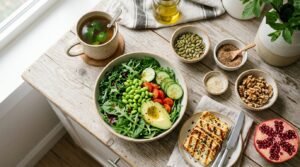
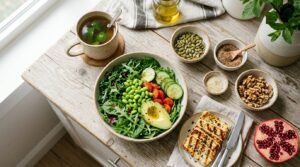
- Wake Up (7:00 AM): 1 Mug Spearmint tea + 1 tbsp soaked pumpkin and ground flaxseeds.
- Breakfast (8:30 AM): 2 Moong Dal Chillas stuffed with grated paneer and spinach + mint-coriander chutney.
- Mid-Morning (11:00 AM): 1 Tender green coconut water or thin spiced buttermilk with roasted jeera.
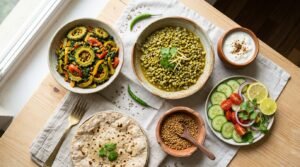
- Lunch (1:30 PM): 1 Large plate fresh salad + 1.5 Jowar (Sorghum) Rotis + 1 Bowl Chana Dal + 1 Bowl Stir-Fried Methi Bhindi + 1 Cup A2 Curd.
- Evening (5:00 PM): 1 Cup Organic Green Tea or Chamomile Tea + Handful of roasted makhana (foxnuts).
- Dinner (8:00 PM): 150g Grilled Tofu or Lemon-Herb Chicken Breast with sauteed broccoli, bell peppers, and zucchini.
Tuesday
- Wake Up: Warm cinnamon water + 2 whole walnuts and 4 soaked almonds.
- Breakfast: Sprouted Methi & Vegetable Daliya with green peas, carrots, and roasted peanuts.
- Mid-Morning: 1 Small Guava or 1/2 cup pomegranate seeds.
- Lunch: 1 Cup Cucumber-Tomato Salad with lemon dressing + 1 Multigrain Roti + 1 Bowl Rajma Curry + 1 Bowl Cabbage-Green Pea Sabzi.
- Evening: Roasted Bengal Gram (Chana) + Herbal ginger-tulsi tea.
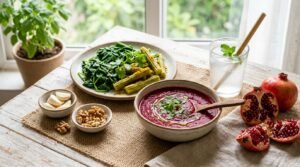
- Dinner: Large Bowl of Spinach and Lentil Soup + 1 Small Bajra Roti with steamed bottle gourd (lauki).
Wednesday
- Wake Up: Spearmint tea + 1 tbsp soaked seeds (follicular/luteal cycle).
- Breakfast: 3 Steamed Ragi & Urad Dal Idlis with freshly ground tomato-garlic chutney (no sugar).
- Mid-Morning: 1 Glass of thin buttermilk (chaas) infused with crushed ginger and curry leaves.
- Lunch: 1/2 Cup Cooked & Cooled Brown Basmati Rice + 1 Large Bowl Yellow Moong Dal with tadka in 1 tsp ghee + Stir-Fried Karela (Bitter Gourd).
- Evening: Handful of raw pumpkin seeds + 1 cup warm turmeric almond milk (unsweetened).
- Dinner: Paneer / Mushroom Tikka skewers with grilled onions, capsicum, and mixed greens.
Thursday
- Wake Up: Warm water with 1 tbsp Apple Cider Vinegar (with mother).
- Breakfast: Egg Scramble (2 whole eggs + 1 white) or Tofu Bhurji with tomatoes, onions, and turmeric + 1 slice Sprouted Whole Grain Bread.
- Mid-Morning: 1 Medium Green Apple sprinkled with Ceylon cinnamon powder.
- Lunch: 2 Besan-Missi Rotis + 1 Bowl Masoor Dal (Red Lentil) + 1 Bowl Palak Paneer (using moderate paneer) + Cucumber salad.
- Evening: Boiled Sprouted Moong Chaat with lemon and pink salt.
- Dinner: Grilled Fish Fillet or Soya Chunk Curry with cauliflower-rice stir-fry.
Friday
- Wake Up: Spearmint tea + Soaked almonds.
- Breakfast: Steel-Cut Oats cooked savory with mustard seeds, curry leaves, chopped beans, and roasted peanuts.
- Mid-Morning: 1 Cup of Clear Vegetable Broth with black pepper.
- Lunch: 1 Bowl Mixed Sprouts Salad + 1.5 Jowar Rotis + 1 Bowl Black Eyed Peas (Lobia) + 1 Bowl Baingan Bharta.
- Evening: Roasted Sunflower seeds + Chamomile tea.
- Dinner: Soya Chunk & Vegetable Khichdi (70% Dal, 30% Brown Rice) with a side of mixed vegetable raita.
Saturday
- Wake Up: Cinnamon stick water + 2 walnuts.
- Breakfast: Sprouted Green Gram Pesarattu (crepe) served with ginger-coriander chutney.
- Mid-Morning: 1 Cup of fresh tender cucumber and mint cold juice.
- Lunch: 1.5 Bajra Methi Roti + 1 Bowl Dal Tadka + 1 Bowl Stir-Fried Beans & Carrots + 100g Fresh Curd.
- Evening: Roasted Makhana tossed with olive oil, turmeric, and black pepper.
- Dinner: Herb-Baked Chicken Breast or Grilled Tofu with sauteed mushrooms, French beans, and cherry tomatoes.
Sunday
- Wake Up: Spearmint tea + Seed cycling mix.
- Breakfast: Paneer-stuffed whole grain paratha (cooked with minimal cold-pressed oil) + 1 bowl plain curd.
- Mid-Morning: 1 Small seasonal orange or sweet lime (Mosambi with pulp, not juiced).
- Lunch: Sunday Balanced Thali: Green salad + 1 Cup Dal Makhani (prepared with low-fat milk, no cream) + 1 Jowar Roti + Bhindi Masala.
- Evening: Spiced lemon tea + Handful of roasted chana.
- Dinner: High-Protein Mixed Vegetable Soup + Steamed edamame or pan-seared paneer cubes.
8. Targeted Supplements & Herbal Botanicals
While nutritional foundations are non-negotiable, specific clinical nutraceuticals can accelerate hormonal normalization:
- Myo-Inositol & D-Chiro-Inositol (40:1 Ratio):
- Mechanism: Acts as a secondary messenger for insulin signaling. A 40:1 physiological ratio of Myo to D-Chiro inositol restores ovarian sensitivity, improves egg quality, and re-establishes regular menstrual cycles.
- Clinical Dose: 2,000–4,000mg Myo-Inositol + 50–100mg D-Chiro-Inositol daily.
- Spearmint Tea (Mentha spicata):
- Mechanism: Clinical trials show that consuming 2 cups of organic spearmint tea daily significantly reduces free testosterone levels and increases Luteinizing Hormone (LH) and Follicle-Stimulating Hormone (FSH), helping reverse facial hirsutism and cystic acne.
- Vitamin D3 & K2:
- Over 80% of Indian women with PCOS are severely deficient in 25-hydroxy Vitamin D. Optimal serum levels (> 50 ng/mL) correlate with improved follicular development and insulin sensitivity.
- Magnesium Glycinate:
- Calms the central nervous system, reduces evening cortisol spikes, and acts as an essential cofactor for tyrosine kinase in cellular glucose uptake.
9. Physical Exercise Strategies for PCOS: Strength vs Cardio
Exercise prescription in PCOS must respect hormonal sensitivity. Chronic high-intensity cardio (such as daily intense spin classes or long-distance running) can chronically elevate cortisol, increasing abdominal fat deposition and exacerbating adrenal androgen production.
Optimal PCOS Workout Protocol:
3–4 Days Progressive Resistance Training + Daily 8,000–10,000 Steps + 1–2 Days Restorative Yoga / Pilates
- Prioritize Progressive Resistance Training (PRT):
- Lifting weights or bodyweight calisthenics builds metabolically active lean muscle. Muscle tissue is the primary site for insulin-mediated glucose clearance, independent of insulin availability.
- Non-Exercise Activity Thermogenesis (NEAT):
- Walking 8,000 to 10,000 steps daily keeps the lymphatic system active, reduces cortisol, and supports natural insulin sensitivity without stressing the adrenals.
10. Frequently Asked Questions (FAQs)
Can PCOS be cured permanently?
PCOS is a genetic and metabolic predisposition rather than an acute infection; therefore, medical science does not refer to a permanent “cure.” However, complete symptomatic and hormonal remission is entirely achievable. Women can achieve regular ovulatory cycles, clear skin, natural fertility, and healthy body composition indefinitely through sustained lifestyle habits.
Is white rice strictly forbidden for Indian women with PCOS?
White rice is not forbidden, but it must be managed strategically. It should never be consumed as a standalone large plate. Limit portions to 1/2 cup cooked, choose parboiled Basmati or hand-pounded varieties, and always combine it with double the volume of high-protein dal, fibrous vegetables, and healthy fats.
How long does it take to see results on a PCOS diet?
Cellular insulin sensitivity begins improving within 2 to 4 weeks. Reductions in bloating, energy crashes, and acne generally follow within 6 to 8 weeks. Regulating the menstrual cycle and seeing significant improvements in hair thinning or hirsutism typically takes 3 to 6 months, corresponding to the biological timeline of follicular development (approx. 90–120 days).
11. Scientific References & Clinical Disclaimer
- Azziz, R., et al. (2016). “Polycystic ovary syndrome.” Nature Reviews Disease Primers, 2(1), 16057.
- Unfer, V., et al. (2017). “Myo-inositol effects in women with PCOS: a meta-analysis of randomized controlled trials.” Endocrine Connections, 6(8), 647-658.
- Grant, P. (2010). “Spearmint herbal tea has significant anti-androgen effects in polycystic ovarian syndrome: a randomized controlled trial.” Phytotherapy Research, 24(2), 186-188.
- Ganie, M. A., et al. (2019). “Prevalence of polycystic ovary syndrome (PCOS) among young women in India.” Gynecological Endocrinology, 35(11), 972-976.
Medical Disclaimer: The information presented in this article is provided solely for educational, informational, and general dietary reference purposes. It is not intended to replace personalized diagnosis, clinical treatment, or medical advice from a licensed gynecologist, endocrinologist, or registered clinical dietitian. Women who suspect they have PCOS should undergo formal medical evaluation, including pelvic ultrasonography and comprehensive hormonal blood profiling (including Fasting Insulin, Total & Free Testosterone, DHEA-S, LH:FSH ratio, and Thyroid Panel).