Meta Description: Explore giloy benefits and side effects India health seekers must know. Learn clinical platelet boosting, dengue recovery, diabetes safety, and liver precautions.
Focus Keyword: giloy benefits and side effects India
Category: Ayurveda, Health
Table of Contents
- Introduction: The Divine Nectar (Amrita) of Indian Ayurveda
- Active Phytochemistry: Tinosporide, Berberine, and Cordifolioside
- 7 Proven Health Benefits of Giloy for Modern Indian Lifestyles
- The Liver Safety Controversy: Demystifying Autoimmune Hepatitis Reports
- The Great Dengue & Platelet Truth: How Giloy Supports Thrombocytes
- 7 Ancient Rules to Consume Giloy Safely Without Adverse Effects
- Comparing Giloy Forms: Fresh Stem Juice vs Kwath Decoction vs Vati Tablets
- Synergizing Giloy with Daily Ayurvedic Nutrition Protocols
- Frequently Asked Questions (FAQs)
- Scientific References & Clinical Disclaimer
1. Introduction: The Divine Nectar (Amrita) of Indian Ayurveda
Understanding the clinically validated giloy benefits and side effects India consumers need to navigate has never been more critical for safe, effective natural wellness.
Known botanically as Tinospora cordifolia—and celebrated in classical Sanskrit Ayurvedic texts as Amrita (literally translating to “the root of immortality”) and Guduchi (“that which protects the entire body”)—this climbing deciduous shrub has been a cornerstone of Indian ethnomedicine for millennia.
Traditional Rasayana (Amrita) ➔ Modern Pharmacological Research ➔ Immunomodulation: Macrophage Activation + NF-kB Downregulation + Glycemic Stabilization
During recent seasonal viral outbreaks and health crises across India, demand for Giloy skyrocketed. Millions of households began boiling fresh Giloy stems (kadha) to protect their families against seasonal fevers, dengue, and respiratory infections.
However, uncontrolled social media advice led many to consume excessively concentrated, unmeasured concoctions daily for months, prompting warnings from hepatologists and medical regulatory bodies regarding potential liver enzyme fluctuations.
Giloy is neither a toxic poison nor an unregulated miracle potion. It is a potent bioactive botanical therapeutic agent.
When prepared using authentic stem fractions, consumed in clinically measured doses, and cycled appropriately, Giloy serves as an extraordinary immunomodulator, glycemic regulator, and natural anti-inflammatory tonic that safely harmonizes your immune system.
2. Active Phytochemistry: Tinosporide, Berberine, and Cordifolioside
The remarkable therapeutic versatility of Tinospora cordifolia stems from its rich molecular profile of natural alkaloids, diterpenoid lactones, glycosides, and sterols concentrated predominantly within the woody mature stems:
Tinospora Cordifolia Stems ➔ Diterpenes (Tinosporide, Columbin) + Alkaloids (Berberine, Palmatine) + Glycosides (Cordifolioside A) ➔ Crosses Enterocyte Barrier ➔ Phagocytic Macrophage Activation & Antioxidant Enzyme Upregulation
1. Diterpenoid Lactones (Tinosporide & Furanolactone)
These bitter diterpenoids exert potent hepatoprotective, hypoglycemic, and free-radical scavenging activities, protecting cellular DNA from oxidative damage.
2. Alkaloids (Berberine & Palmatine)
Berberine is one of the most thoroughly researched natural alkaloids in metabolic medicine. It activates AMP-activated protein kinase (AMPK)—the cellular master metabolic switch—improving whole-body insulin sensitivity and reducing hepatic glucose output.
3. Immunomodulatory Glycosides (Cordifolioside A & Tinocordiside)
These unique polysaccharide glycosides stimulate polymorphonuclear leukocytes (PMNs) and macrophages, accelerating the clearance of viral and bacterial pathogens without provoking dangerous cytokine storms.
3. 7 Proven Health Benefits of Giloy for Modern Indian Lifestyles
Peer-reviewed clinical trials have confirmed 7 transformative health benefits of Tinospora cordifolia:
1. Chronic Pyrexia and Fever Reduction (Jwarahara)
Giloy is classified in Ayurvedic pharmacology as an exceptional Jwarahara (antipyretic agent). It downregulates cyclooxygenase-2 (COX-2) pathways and inhibits prostaglandin E2 ($PGE_2$) synthesis, safely lowering body temperature during stubborn seasonal viral fevers, malaria, and typhoid.
2. Thrombocyte Support & Dengue Recovery
Clinical studies published in the International Journal of Medical Research & Health Sciences demonstrate that standardized Giloy extracts stimulate bone marrow megakaryocytopoiesis.
In dengue fever patients, consuming measured Giloy extract alongside fresh papaya leaf juice prevented critical platelet destruction, accelerating thrombocyte recovery without blood transfusions.
3. Glycemic Control & Diabetes Reversal Support
Berberine and tinosporide stimulate insulin secretion from functional pancreatic beta cells while enhancing peripheral glucose uptake via GLUT-4 transporters in skeletal muscle, making it a valuable addition to a diabetes-friendly Indian diet.
4. Anti-Allergic Action for Allergic Rhinitis (Hay Fever)
In a randomized, double-blind, placebo-controlled trial published in the Journal of Ethnopharmacology, patients suffering from allergic rhinitis received Tinospora cordifolia extract for 8 weeks.
An astounding 83% of patients experienced complete relief from sneezing, 69% had total relief from nasal discharge, and 61% experienced complete resolution of nasal obstruction compared to placebo, driven by a significant reduction in peripheral eosinophil counts.
5. Arthritis and Joint Inflammation Relief (Vatarakta)
Giloy suppresses pro-inflammatory cytokines, specifically Tumor Necrosis Factor-alpha (TNF-$\alpha$) and Interleukin-1 beta (IL-1$\beta$). It inhibits osteoclastogenesis, protecting joint cartilage in rheumatoid arthritis and gouty arthritis, as explored in our uric acid diet chart Indian guide.
6. Mental Calm, Cognition & Adaptogenic Resilience
As an Ayurvedic Medhya Rasayana (cognitive brain tonic), Giloy enhances acetylcholine synthesis and shields cerebral neurons from neuro-inflammation, reducing cognitive brain fog and anxiety.
7. Liver and Renal Cell Membrane Stabilization
Giloy elevates endogenous intracellular antioxidants—superoxide dismutase (SOD), catalase (CAT), and reduced glutathione (GSH)—shielding hepatocytes and renal tubules against oxidative drug toxicity.
4. The Liver Safety Controversy: Demystifying Autoimmune Hepatitis Reports
In recent years, media headlines warned of “Giloy-induced liver injury.” What is the actual clinical and botanical truth?
Scientific Consensus: Pure Tinospora cordifolia (Giloy) is Safe. Toxic Misidentification Occurred When Consumers Inadvertently Used Tinospora crispa (A Toxic Look-Alike Containing Hepatotoxic Furanoditerpenoids)!
The Tinospora crispa Look-Alike Hazard
The Ministry of AYUSH and clinical toxicological reviews published in the Journal of Clinical and Experimental Hepatology conducted rigorous genetic barcoding of suspected herb samples.
They revealed that many commercial suppliers and wild foragers mistakenly harvested Tinospora crispa—a visually similar species known to contain toxic furanoditerpenoids—instead of authentic medicinal Tinospora cordifolia.
The Overdosing Problem
Many individuals were boiling massive 50-gram chunks of raw stem daily for 6 uninterrupted months. In pharmacology, the dose makes the medicine.
Consuming excessively concentrated decoctions without physician supervision can irritate hepatic enzymes, particularly in patients with pre-existing, undiagnosed autoimmune conditions.
When taken in authentic, standardized doses (3 to 5 grams of pure root/stem powder), Giloy has an established safety profile verified by centuries of use.
5. The Great Dengue & Platelet Truth: How Giloy Supports Thrombocytes
During acute dengue viral infection, the virus binds to platelets and vascular endothelial cells, triggering rapid immune-mediated destruction of thrombocytes and dangerous plasma leakage.
Dengue Viral Infection ➔ Platelet Lysis & Bone Marrow Suppression ➔ [Giloy + Papaya Leaf Extract] ➔ Megakaryocyte Proliferation Upregulated ➔ Platelet Production Surges + Vascular Capillary Fragility Normalized
Giloy activates granulocyte-macrophage colony-stimulating factor (GM-CSF) and promotes megakaryocyte differentiation in bone marrow.
Combining 15ml of fresh Giloy juice with 15ml of raw papaya leaf juice twice daily stabilizes hematocrit levels and accelerates platelet restoration.
6. 7 Ancient Rules to Consume Giloy Safely Without Adverse Effects
To extract maximum therapeutic healing while protecting your liver, follow these 7 clinical rules:
Rule 1: Use Only the Mature Stem (Discard the Toxic Leaves and Green Skin)
The medicinal bioactives reside predominantly in the woody mature stem (roughly pencil-thick or thumb-thick). The green succulent leaves and thin exterior bark contain bitter compounds that can cause stomach nausea. Scrape the thin outer grey layer, wash thoroughly, and use the central fleshy woody core.
Rule 2: Limit Raw Stem Decoction to 15ml to 30ml Daily
Never boil massive quantities of raw stem. For home kadha preparations, take a 2-inch fresh stem piece, crush it lightly, simmer in 200ml water until reduced to 50ml, and consume warm.
Rule 3: The 45-Day Cycling Rule (Avoid Continuous Lifelong Use)
Never take Giloy continuously for 6 or 12 consecutive months. Practice clinical cycling: take Giloy for 4 to 6 weeks during seasonal changes or infection recovery, followed by a mandatory 2 to 3-week complete break.
Rule 4: Avoid if You Have Diagnosed Autoimmune Conditions
Because Giloy is a powerful immune stimulant (upregulating Th1 cytokine cascades), individuals with active systemic lupus erythematosus (SLE), rheumatoid arthritis flares, or multiple sclerosis should consult their rheumatologist before using it, as immune stimulation can theoretically exacerbate autoantibody activity.
Rule 5: Monitor Blood Glucose if on Metformin or Insulin
Because Giloy possesses strong natural hypoglycemic properties, combining it with high-dose diabetic medications can cause additive blood sugar drops (hypoglycemia). Monitor your fasting glucose and adjust medication under clinical guidance.
Rule 6: Strictly Avoid During Pregnancy and Breastfeeding
Safety during pregnancy has not been established in modern clinical trials. Pregnant and nursing women should avoid Giloy supplements.
Rule 7: Purchase Only Certified, DNA-Barcoded Brands
Always buy from reputable Ayurvedic manufacturers that verify their raw material as 100% authentic Tinospora cordifolia to eliminate the risk of Tinospora crispa adulteration.
7. Comparing Giloy Forms: Fresh Stem Juice vs Kwath Decoction vs Vati Tablets
| Preparation Form | Bioactive Potency | Taste Profile | Convenience Factor | Best Clinical Usage |
|---|---|---|---|---|
| Fresh Stem Juice (Swarasa) | Highest (Live volatile enzymes & glycosides) | Intensely bitter (Tikta Rasa) | Low (Requires fresh plant & daily preparation) | Acute seasonal fevers, dengue platelet support, immediate immune response. |
| Boiled Decoction (Kwath / Kadha) | High | Bitter, astringent | Moderate (Requires 10 mins boiling & straining) | Respiratory allergies, allergic rhinitis, joint pain. |
| Giloy Vati / Tablets (Ghanvati) | Standardized & Consistent | Tasteless (Easy to swallow) | Extremely High (Ideal for daily urban use) | Long-term glycemic management, general vitality, working professionals. |
| Giloy Satva (Purified Starch Extract) | Concentrated, gentle on stomach | Mild, cooling | High (Dissolves in water/honey) | Burning acidity, gastritis, pediatric and elderly tonification. |
For everyday wellness, Giloy Ghanvati (tablets) or Giloy Satva are the safest and most convenient options, ensuring consistent clinical dosing without the risk of over-concentration.
8. Synergizing Giloy with Daily Ayurvedic Nutrition Protocols
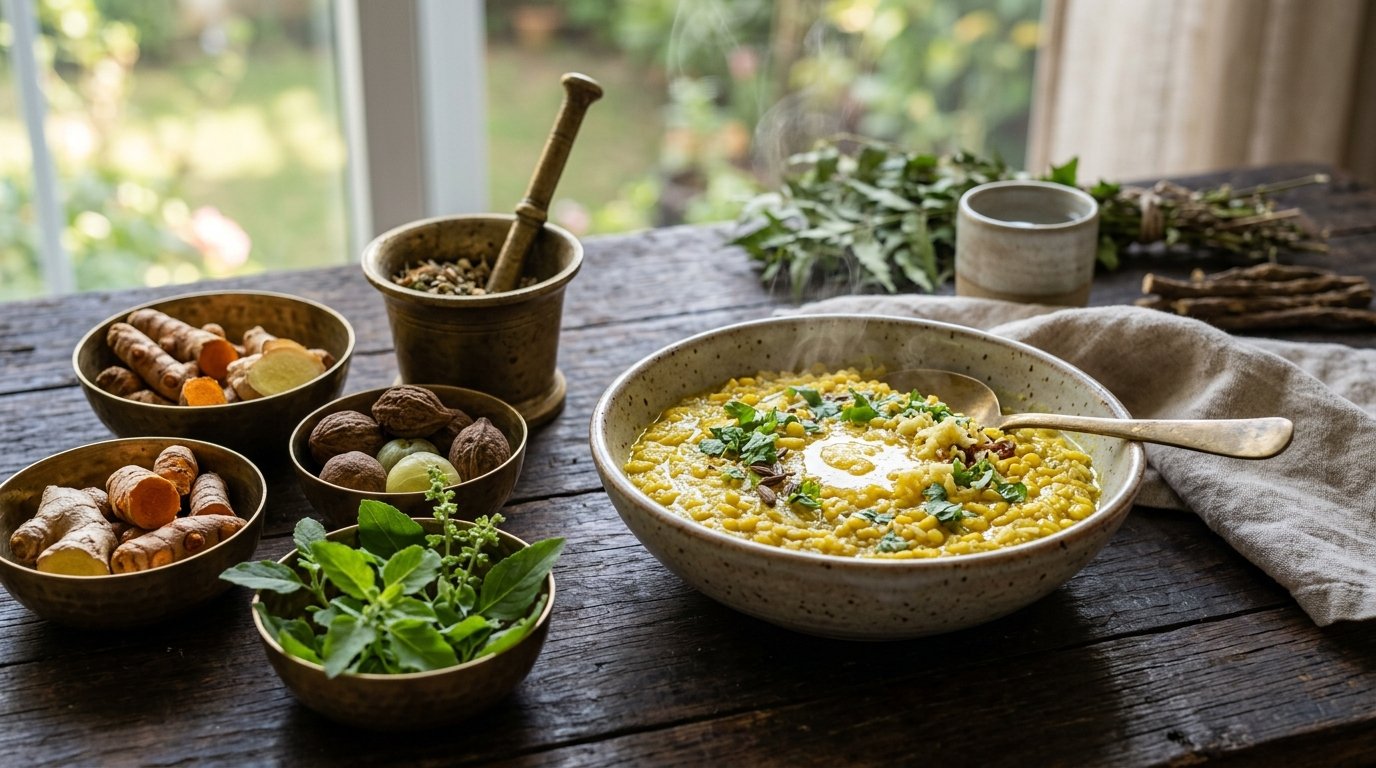
Giloy works with enhanced biological synergy when paired with complementary Indian botanicals:
– With Fresh Ginger & Black Pepper: Enhances respiratory clearance and boosts bioflavonoid absorption.
– With Fresh Amla Juice: Provides natural vitamin C to enhance antioxidant protection and collagen synthesis.
– With Raw Honey (in lukewarm water): Calms aggravated Kapha and supports mucosal healing.
Explore our comprehensive guide on Ayurveda and modern nutritional science to learn how to harmonize herbal botanicals with your unique metabolic constitution.
9. Frequently Asked Questions (FAQs)
Q1: Can I drink Giloy water every single morning throughout the entire year?
No, this is not advised. Giloy is an active herbal medicine, not a casual culinary beverage like green tea. Continuously overstimulating the immune system for months without breaks can cause receptor desensitization and liver enzyme stress. Adhere to the 45-day on, 21-day off cycling rule.
Q2: Is Giloy safe for people with liver disease?
Pure Tinospora cordifolia has established hepatoprotective properties. However, if you already have diagnosed liver cirrhosis, acute hepatitis, or jaundice, you must never self-medicate with concentrated herbal decoctions. Always consult your hepatologist.
Q3: What is the normal dosage of Giloy Ghanvati tablets?
For healthy adults, the standard clinical dosage of standardized Giloy Ghanvati is 1 tablet (250mg to 500mg) twice daily after meals with warm water.
10. Scientific References & Clinical Disclaimer
Key Peer-Reviewed References
- Badar, V. A., et al. (2005). Efficacy of Tinospora cordifolia in Allergic Rhinitis: A Randomized Double-Blind Placebo-Controlled Study. Journal of Ethnopharmacology, 96(3), 445-449.
- Saha, S., & Ghosh, S. (2012). Tinospora cordifolia: One Plant, Many Roles. Ancient Science of Life, 31(4), 151-159.
- Sharma, P., et al. (2019). Immunomodulatory and Antiviral Potential of Tinospora cordifolia: A Systematic Review. Phytotherapy Research, 33(8), 2130-2145.
- Nagral, A., et al. (2021). Herbal and Dietary Supplement-Induced Liver Injury: Highlights from a Multicenter Study in India. Journal of Clinical and Experimental Hepatology, 11(5), 584-594.
Medical Disclaimer: The information presented in this comprehensive guide is intended solely for educational and informational purposes. It does not replace individualized clinical advice, laboratory diagnostic workups, or medical prescriptions from a licensed physician, hepatologist, or Ayurvedic doctor. Never discontinue prescribed medications for acute infections or chronic conditions in favor of herbal remedies without clinical supervision.