Meta Description: Discover constipation relief home remedies Indian kitchens trust. 7 fast natural ways using isabgol, triphala, munakka, and warm ghee milk to clear bowels safely.
Focus Keyword: constipation relief home remedies Indian
Category: Health, Wellness
Table of Contents
- Introduction: The Silent Constipation Crisis Across India
- The Physiology of Colon Motility: The Enteric Nervous System & Peristalsis
- The Dangers of Chemical Laxative Dependency (Senna & Dulcolax Damage)
- 7 Clinically Proven Constipation Relief Home Remedies Indian Kitchens Offer
- The Ancient Ayurvedic Ghee-Milk Protocol (Sneha Virechana Decoded)
- Toilet Posture and the Puborectalis Muscle: The Indian Squat vs Western Commode
- The 4-Pillar Daily Routine for Effortless Morning Evacuation
- Synergizing Gut Cleansing with High-Fiber Indian Nutrition
- Frequently Asked Questions (FAQs)
- Scientific References & Clinical Disclaimer
1. Introduction: The Silent Constipation Crisis Across India
Discovering safe, evidence-based constipation relief home remedies Indian families have trusted for generations is essential for restoring daily vitality, abdominal comfort, and systemic health.
According to nationwide epidemiological surveys published by the Indian Society of Gastroenterology (ISG), nearly 22% of adult Indians suffer from chronic functional constipation, with urban centers exhibiting rates as high as 30%.
Sedentary Desk Life + Low Fiber Diet + Dehydration ➔ Stool Dries in Descending Colon ➔ Sluggish Colonic Transit (>72 Hours) ➔ Hard, Pellet-Like Stools, Straining & Pelvic Pain
In modern Indian cities, desk-bound lifestyles, high stress, low water intake, and a heavy diet of refined flours (maida) and fried snacks have crippled natural bowel motility.
Constipation is not merely an occasional morning inconvenience; it is a whole-body systemic burden.
When fecal matter stagnates inside the large intestine for 48 to 72 hours, putrefactive bacteria ferment waste, producing toxic gases, indoles, and phenols that enter the bloodstream via the portal vein.
Symptoms manifest as chronic abdominal bloating, severe gas, bad breath (halitosis), skin breakouts, fatigue, and hemorrhoids (piles).
Harsh over-the-counter stimulant laxatives can damage the neural plexus of the bowel wall, leading to long-term “lazy colon” syndrome.
Authentic Indian culinary and Ayurvedic traditions offer gentle, non-habit-forming, whole-food remedies that hydrate stool, stimulate natural rhythmic peristalsis, and ensure complete, effortless morning bowel evacuation.
2. The Physiology of Colon Motility: The Enteric Nervous System & Peristalsis
To conquer chronic constipation, one must understand how your large intestine moves waste toward the rectum:
Chyme Enters Cecum ➔ Colonic Segmentation & Mass Movements ➔ Water Reabsorbed by Enterocytes ➔ Fecal Bolus Reaches Rectum ➔ Rectal Distension Triggers Defecation Reflex via Parasympathetic Sacral Nerves
1. The Migrating Motor Complex (MMC)
Between meals, a cyclical electrical wave called the Migrating Motor Complex (MMC) sweeps through the stomach and small intestine, clearing residual food debris and bacteria down into the colon. Constant snacking interrupts this wave, leading to small intestinal bacterial overgrowth (SIBO) and constipation.
2. Colonic Water Reabsorption and Stool Consistency
The colon filters and reabsorbs approximately 1.5 to 2.0 liters of liquid daily. If colonic transit is abnormally slow:
– Colonocytes reabsorb too much water from the fecal bolus.
– Stool transforms from soft, smooth sausages (Bristol Stool Scale Type 3 and 4) into hard, dry, painful pebbles (Bristol Type 1 and 2).
– Straining against hardened feces increases intra-abdominal pressure, causing anal fissures and varicose hemorrhoids.
3. The Dangers of Chemical Laxative Dependency (Senna & Dulcolax Damage)
In a desperate bid for quick morning relief, millions of Indians regularly consume over-the-counter chemical stimulant laxatives (such as bisacodyl, sodium picosulfate, or high-dose senna leaves).
This provides short-term relief at the cost of long-term bowel damage.
Stimulant Laxatives (Senna / Bisacodyl) ➔ Chemically Irritates Myenteric Plexus Nerve Endings ➔ Smooth Muscle Spasms & Water Purge ➔ Progressive Neuromuscular Atrophy (Melanosis Coli) ➔ Colon Loses Natural Ability to Contract!
The Pitfalls of Long-Term Stimulant Use:
- Melanosis Coli: Chronic use of anthraquinone laxatives (like senna) causes dark brownish-black pigmentation of the colonic mucosa due to apoptosis of mucosal epithelial cells.
- Cathartic Colon Syndrome: Over time, the smooth muscles of the colon become floppy, dilated, and atonic, requiring ever-increasing chemical doses to trigger evacuation.
- Electrolyte Depletion: Chronic stimulant purging causes rapid urinary and fecal loss of potassium, leading to muscle weakness and cardiac arrhythmias.
Natural home remedies, by contrast, focus on osmotic hydration and gentle mechanical bulking, allowing the bowel to heal and contract on its own.
4. 7 Clinically Proven Constipation Relief Home Remedies Indian Kitchens Offer
Here are the 7 most effective, gentle, and scientifically validated home remedies to relieve acute and chronic constipation:
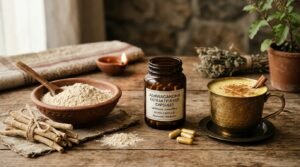
1. Isabgol (Pure Psyllium Husk) with Lukewarm Water (The Osmotic Bulker)
- The Science: Psyllium husk contains 70% soluble mucilaginous fiber. When mixed with water, it forms an emollient gelatinous gel that retains moisture in the fecal mass, softening stool and stimulating natural mechanical peristalsis.
- How to Take: Stir 1 to 2 tablespoons (5g to 10g) of pure isabgol into a tall glass (250ml) of lukewarm water or warm milk. Drink immediately before the gel thickens, followed by another half-glass of plain water, taken 30 minutes before bedtime.
2. Soaked Black Raisins (Munakka) with Warm Water (The Natural Osmotic Flush)
- The Science: Munakka (large black dried raisins with seeds) contains concentrated natural sorbitol and magnesium. Sorbitol is a non-digestible sugar alcohol that acts as an osmotic laxative, drawing water directly into the large intestine.
- How to Take: Soak 8 to 10 black raisins in clean water overnight. In the morning, chew the rehydrated raisins thoroughly and drink the sweet soaking water on an empty stomach.
3. Triphala Churna Bedtime Elixir (The Colon Restorative)
- The Science: The sacred trio of Amalaki, Haritaki, and Bibhitaki acts as a gentle prokinetic. Haritaki contains anthraquinones that tone bowel wall musculature, while Amalaki cools gastric acidity, as detailed in our guide on triphala churna benefits and side effects.
- How to Take: Mix 1 level teaspoon (3g to 5g) of pure Triphala churna in a mug of warm water and drink 45 minutes before sleep.
4. Warm Cow’s Milk with 1 Teaspoon Pure Desi Ghee (The Classical Lubricant)
- The Science: Clarified cow’s butter (ghee) is rich in butyric acid (butyrate)—the primary fuel used by colonocytes for mucosal cellular repair. Ghee lubricates the mucosal surface of the colon, allowing hardened stool to slide effortlessly.
- How to Take: Heat 1 cup (200ml) of warm milk, stir in 1 teaspoon (5ml) of pure cow ghee, and sip slowly before bed.
5. Soaked Dried Figs (Anjeer) with Warm Water
- The Science: Dried figs are exceptionally rich in insoluble cellulosic fiber and ficoid enzymes that accelerate intestinal motility.
- How to Take: Soak 2 dried figs in warm water overnight. In the morning, eat the soft, swollen figs and drink the soaking water.
6. Flaxseed (Alsi) Gel Infusion
- The Science: Flaxseeds are packed with soluble mucilage that forms an emollient intestinal coating, soothing irritated hemorrhoidal veins while softening stool.
- How to Take: Boil 1 tablespoon of whole or coarsely ground flaxseeds in 300ml water for 5 minutes until a light gel forms. Strain and drink warm before breakfast.
7. Fresh Raw Papaya or Ripe Papaya Cubes
- The Science: Papaya contains papain, a powerful proteolytic enzyme that breaks down stubborn dietary proteins, alongside concentrated pectin fiber that softens fecal consistency.
- How to Take: Consume 1 medium bowl (150g) of freshly sliced ripe papaya 1 hour before dinner.
5. The Ancient Ayurvedic Ghee-Milk Protocol (Sneha Virechana Decoded)
In classical Ayurvedic medicine, chronic constipation is diagnosed primarily as a manifestation of aggravated Vata dosha (characterized by dryness (Ruksha), coldness (Sheeta), and hard roughness).
Aggravated Vata Dosha in Colon (Pakwashaya) ➔ Dry Mucosal Walls & Hard Feces ➔ [Warm Milk + Pure Desi Cow Ghee (Sneha)] ➔ Lubricates Intestinal Lumen + Butyrate Heals Epithelium + Vata Pacified = Soft, Natural Morning Bowel Movement
Warm milk acts as a natural carrier (Anupana), while warm ghee delivers oleation (Snehana) from within.
Unlike harsh chemical purges that cause dehydration, the ghee-milk protocol deeply nourishes the enteric nervous system, pacifying dry intestinal colic and ensuring painless evacuation.
6. Toilet Posture and the Puborectalis Muscle: The Indian Squat vs Western Commode
The widespread adoption of modern seated Western commodes in Indian homes is a major mechanical cause of constipation:
Seated Western Commode (90-Degree Angle): Puborectalis Muscle Chokes the Rectum ➔ Anorectal Angle Constricted ➔ Requires Severe Straining!
VS
Traditional Indian Squat (35-Degree Angle): Puborectalis Muscle Completely Relaxes ➔ Anorectal Angle Straightens ➔ Smooth Gravity-Assisted Evacuation!
When you sit on a Western commode at a 90-degree angle, the puborectalis muscle remains looped around the lower rectum, creating a kink that acts like a choke collar on a garden hose.
To overcome this kink, individuals strain aggressively, causing pelvic floor descent and hemorrhoids.
The Home Bathroom Fix:
If you have a Western commode, place a 7-inch footstool (a squatting stool) under your feet while seated.
Elevating your knees above your hips bends your torso into a 35-degree squatting angle. This completely relaxes the puborectalis muscle, opening the rectal canal for effortless, gravity-assisted evacuation within 60 seconds.
7. The 4-Pillar Daily Routine for Effortless Morning Evacuation
To establish lifelong regular bowel habits, follow this 4-step morning protocol:
- Ushapan (Morning Water Flush): Immediately upon waking, drink 500ml to 750ml of warm water (preferably stored overnight in a pure copper vessel or infused with lemon). The physical volume of warm water distends the stomach, triggering the gastrocolic reflex that signals the colon to contract.
- 5-Minute Morning Brisk Walk: Take a brisk 5-minute walk around your home. Movement stimulates abdominal blood flow and activates the skeletal-visceral reflex.
- Dedicated, Unhurried Toilet Time: Sit on the toilet at the same time every morning. Do not rush, and never take your smartphone into the bathroom (prolonged distracted sitting on commodes increases hemorrhoidal venous pressure).
- Hydrate Continuously: Drink at least 3 liters of water throughout the day to prevent the colon from drying out fecal waste.
8. Synergizing Gut Cleansing with High-Fiber Indian Nutrition
Home remedies provide immediate relief, but long-term colon health requires daily dietary fiber.
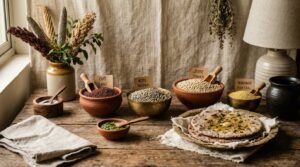
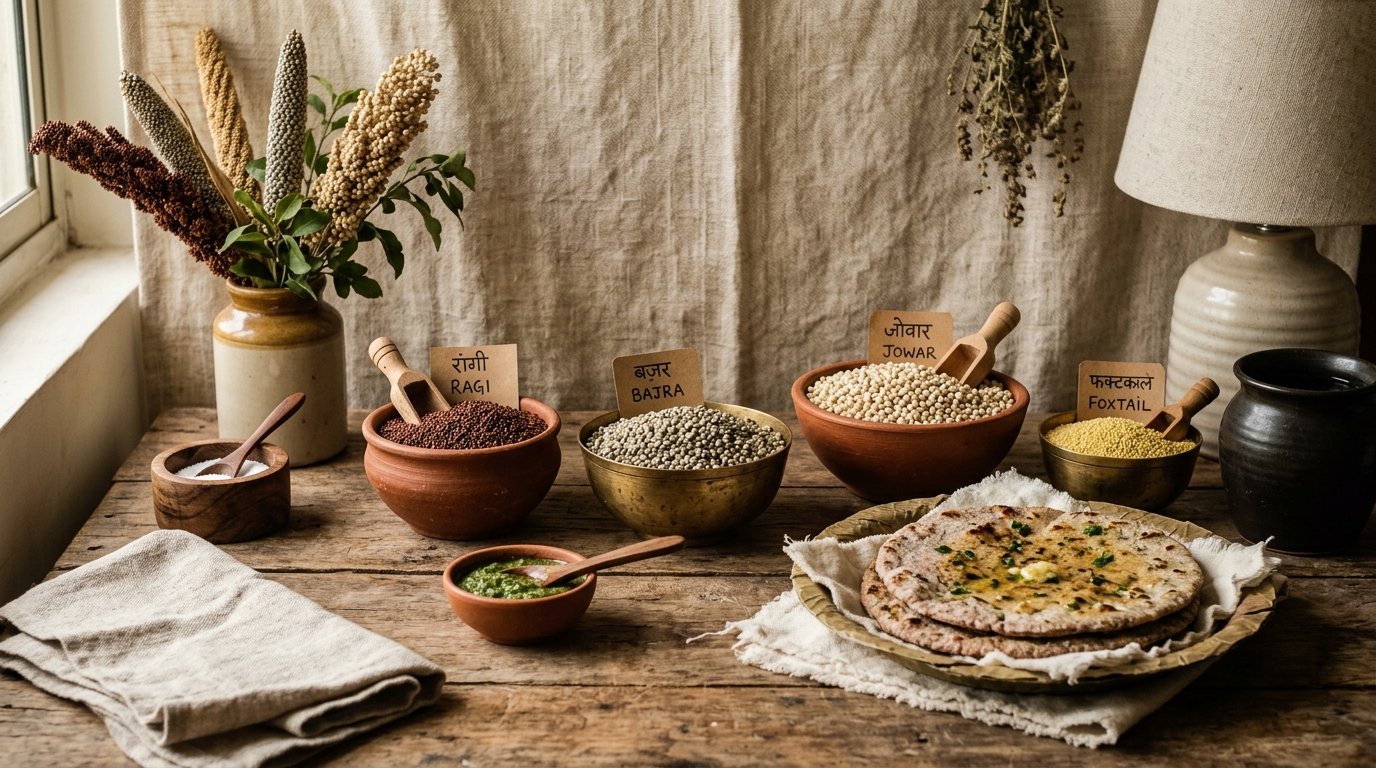
Incorporate ancient whole grains like ragi, foxtail millet, and yellow moong dal into your meals as outlined in our high fiber Indian foods guide and ancient Indian millets guide.
9. Frequently Asked Questions (FAQs)
Q1: Can I take Isabgol every single day without harm?
Yes. Pure psyllium husk (isabgol) is a bulk-forming natural fiber, not a chemical stimulant laxative. It does not cause dependency or damage the enteric nerves. However, always consume it with at least 250ml of liquid to prevent esophageal blockage.
Q2: Why does drinking tea or coffee make some people poop immediately?
Caffeine stimulates cholecystokinin (CCK) and gastrin release, which temporarily accelerates colonic contractions. However, caffeine is also a mild diuretic; over-reliance on coffee without sufficient water can worsen long-term constipation by drying out stool.
Q3: When should constipation be medically evaluated by a doctor?
If constipation is accompanied by rectal bleeding (blood in stool), unexplained weight loss, pencil-thin stools, persistent severe abdominal pain, or sudden onset after age 50, seek immediate clinical evaluation from a gastroenterologist to rule out colorectal pathology.
10. Scientific References & Clinical Disclaimer
Key Peer-Reviewed References
- Ghoshal, U. C., et al. (2012). Epidemiology of Constipation in India: An Asian Neuromotility Association (ANMA) Study. Journal of Neurogastroenterology and Motility, 18(3), 289-294.
- McRorie, J. W. (2015). Evidence-Based Approach to Fiber Supplements and Clinically Meaningful Health Benefits, Part 1. Nutrition Today, 50(2), 82-89.
- Sikirov, D. (2003). Comparison of Straining During Defecation in Three Positions: Results and Implications for Human Health. Digestive Diseases and Sciences, 48(7), 1201-1205.
- Peterson, C. T., et al. (2017). Therapeutic Uses of Triphala in Ayurvedic Medicine. Journal of Alternative and Complementary Medicine, 23(8), 607-614.
Medical Disclaimer: The information presented in this comprehensive guide is intended solely for educational and informational purposes. It does not replace individualized clinical evaluation, laboratory diagnosis, or medical treatment from a licensed physician or gastroenterologist. If you have symptoms of bowel obstruction (vomiting, inability to pass gas, severe swelling), seek emergency medical care immediately.