1. Introduction: The Hypertension & Cardiovascular Crisis in India
Adapting the DASH diet Indian food framework provides a clinically validated roadmap to relax stiff arteries and lower systolic blood pressure naturally.
Hypertension (persistently elevated systemic blood pressure) is the single leading preventable risk factor for cardiovascular disease, myocardial infarction, ischemic stroke, and chronic kidney disease in India. According to national health surveys, over one in four Indian adults (approx. 28% to 33%) has hypertension, with prevalence exceeding 40% in major urban centers.
Tragically, hypertension is often dubbed “The Silent Killer” because the vast majority of hypertensive individuals experience zero noticeable daily symptoms until catastrophic vascular damage has already occurred. Furthermore, South Asians experience myocardial infarctions at an average of 10 years younger than their Western counterparts, driven by smaller coronary artery calibers, premature arterial stiffness, and genetic dyslipidemia.
While anti-hypertensive pharmaceuticals (ACE inhibitors, ARBs, Calcium Channel Blockers) are vital when prescribed, lifestyle and targeted nutritional modifications form the true foundation of long-term cardiovascular health. Adapting the clinically validated DASH (Dietary Approaches to Stop Hypertension) protocol to the rich culinary traditions of Indian kitchens can reduce systolic blood pressure by 8 to 14 mmHg—a reduction equivalent to first-line pharmacotherapy.
2. Blood Pressure Mechanics: Systolic, Diastolic & Arterial Stiffening
Blood pressure is the hydrodynamic lateral force exerted by circulating blood against the endothelial walls of arterial blood vessels:
$$\text{Blood Pressure (BP)} = \text{Cardiac Output (CO)} \times \text{Systemic Vascular Resistance (SVR)}$$
- Systolic Blood Pressure (Upper Number): The peak arterial pressure reached during ventricular myocardial contraction (systole), as blood is forcefully ejected from the heart into the aorta.
- Diastolic Blood Pressure (Lower Number): The minimum arterial pressure maintained during ventricular relaxation (diastole), reflecting continuous basal resistance.
| Blood Pressure Category | Systolic (mmHg) | and/or | Diastolic (mmHg) | Clinical Action |
|---|---|---|---|---|
| Normal | < 120 | and | < 80 | Maintain healthy lifestyle habits |
| Elevated (Pre-hypertension) | 120–129 | and | < 80 | Immediate lifestyle & dietary intervention |
| Stage 1 Hypertension | 130–139 | or | 80–89 | Lifestyle modification + clinical evaluation |
| Stage 2 Hypertension | ≥ 140 | or | ≥ 90 | Prompt medical management & strict nutrition |
| Hypertensive Crisis | > 180 | and/or | > 120 | Immediate emergency medical attention |
3. The Sodium Trap in Indian Diets: Hidden Salt, Pickles & Papads
The World Health Organization (WHO) recommends a maximum daily intake of less than 2,000 mg of sodium (equivalent to approximately 5 grams or 1 flat teaspoon of salt per day). However, epidemiological dietary audits reveal that the average Indian adult consumes 9 to 12 grams of salt daily—more than double the safe biological threshold.
Excess Sodium Ingestion ➔ Extracellular Hyperosmolality ➔ Renal Water Retention ➔ Expanded Plasma Volume ➔ Increased Endothelial Shear Stress ➔ Endothelial Dysfunction & Arterial Stiffening
The 4 Major Sources of Hidden Sodium in Indian Kitchens
- Traditional Pickles (Achaar): Preserved in heavy saturated brine and oil. A single 15g tablespoon of commercial mango or lime pickle can deliver 600 to 900 mg of sodium—almost half your daily allowance.
- Papads and Fryums: Prepared with sodium carbonate (papad khar) and excessive table salt to enhance crispness. A single fried papad contains 250–350 mg of sodium.
- Packaged Savory Namkeens (Bhujia, Sev, Mixture): Coated in fine sodium chloride, flavor enhancers, and monosodium glutamate (MSG).
- Commercial Chaat Masalas & Black Salt (Kala Namak): While marketed as traditional, rock salt and black salt are still predominantly sodium chloride (85–95%) and contribute directly to vascular volume overload.
4. The Potassium-to-Sodium Ratio: The True Blood Pressure Regulator
Evolutionary biology reveals that ancestral human diets provided a Potassium-to-Sodium (K:Na) ratio of approximately 4:1 to 10:1. Today, the modern urban Indian diet has inverted this ratio to 1:2 or worse.
- The Sodium-Potassium ATPase Pump: Cellular membranes require intracellular potassium and extracellular sodium to maintain electrochemical gradients.
- Potassium Promotes Natriuresis: High dietary potassium signals the distal convoluted tubules of the kidneys to excrete excess sodium through the urine, actively lowering intravascular volume.
- Vascular Smooth Muscle Relaxation: Potassium directly induces vasodilation by hyperpolarizing endothelial cells, reducing peripheral resistance.
- Goal: Target a dietary K:Na ratio of at least 2:1 by massively increasing potassium-rich whole plant foods (spinach, bottle gourd, bananas, lentils, coconut water) while reducing processed sodium.
5. The DASH Diet Adapted for Indian Cooking
The Dietary Approaches to Stop Hypertension (DASH) protocol is scientifically proven to lower blood pressure. Here is how to adapt its principles to authentic Indian cooking:
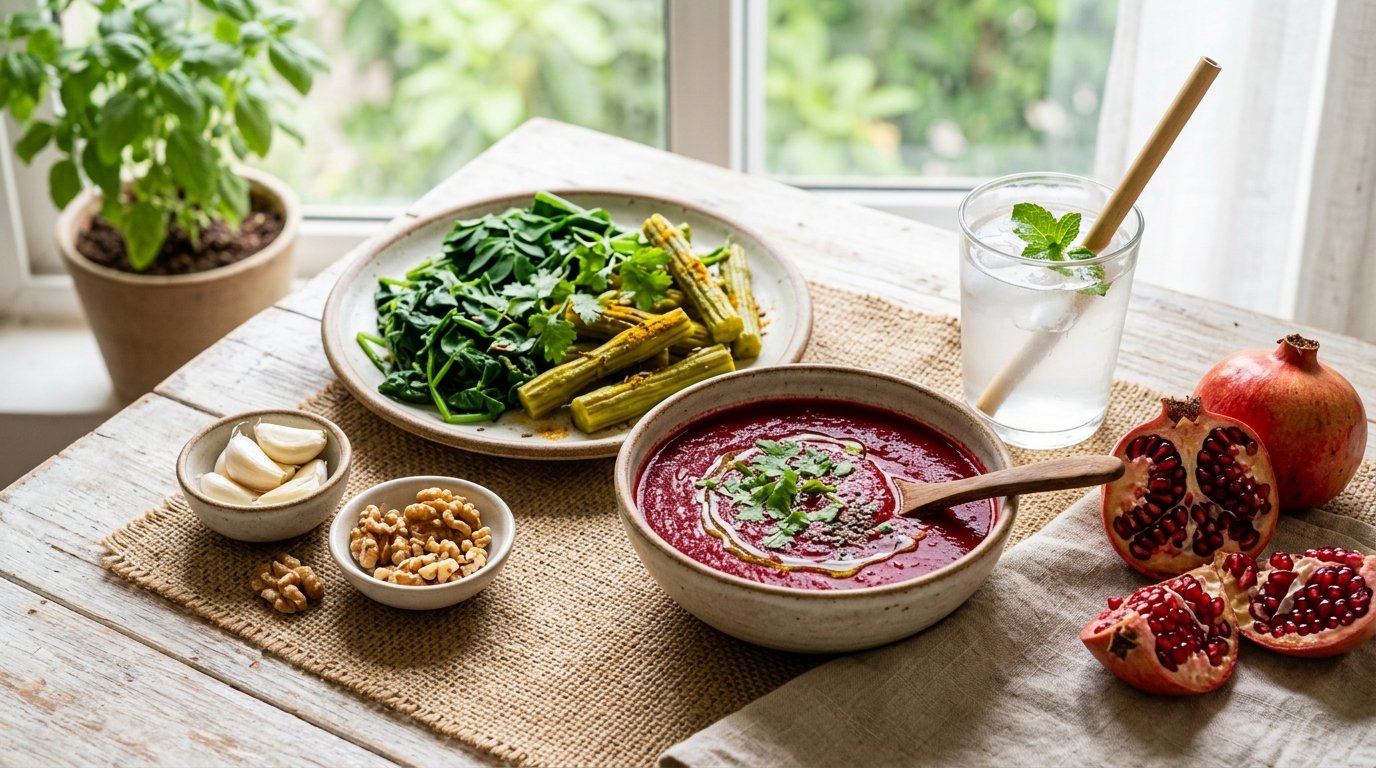
- Abundant Vegetables (4–5 Servings Daily): Focus on leafy greens (palak, methi, sarson), ridge gourd (turai), bottle gourd (lauki), and drumsticks (moringa).
- Whole Fruits (3–4 Servings Daily): Whole fresh fruits rich in potassium, magnesium, and bioflavonoids (guavas, pomegranates, oranges, papayas). Avoid commercial fruit juices.
- Plant-Based Protein & Pulses: Shift emphasis from red meat to moong dal, chana dal, rajma, edamame, and low-fat A2 paneer or tofu.
- Unrefined Whole Grains: Replace white rice and refined maida with whole Jowar (sorghum), Bajra (pearl millet), and steel-cut oats.
- Raw Seeds & Nuts: Daily unsalted walnuts, flaxseeds, and pumpkin seeds providing heart-healthy magnesium and Alpha-Linolenic Acid (ALA).
- Flavor Without Sodium: Master culinary aromatics! Replace excess salt with fresh lemon juice, amchur (dry mango powder), crushed roasted cumin, garlic, ginger, and fresh mint.
6. 7-Day DASH Diet Indian Food Meal Plan to Lower Blood Pressure
(All meals prepared with minimal added iodized salt, strictly no papads or commercial pickles, and cold-pressed mustard or olive oil).
Monday
- Early Morning (7:00 AM): 1 Glass tender fresh coconut water (rich in potassium and electrolytes).
- Breakfast (8:30 AM): Savory Vegetable Oats Upma cooked with carrots, beans, peas, and roasted peanuts, tempered with curry leaves.
- Mid-Morning (11:00 AM): 1 Fresh sweet lime (Mosambi with pulp) or 1 medium guava.
- Lunch (1:30 PM): 1 Large plate fresh cucumber-radish salad + 1.5 Jowar (Sorghum) Roti + 1 Bowl Chana Dal + 1 Bowl Stir-Fried Lauki (Bottle Gourd) + 1 Cup Plain A2 Curd.
- Evening (5:00 PM): 1 Cup Hibiscus tea + Handful of raw unsalted pumpkin seeds.
- Dinner (8:00 PM): Grilled Pomfret / Rohu fish (or Tofu Steaks) marinated in turmeric, lemon, and garlic, served with steamed French beans and carrots.
Tuesday
- Early Morning: 1 Glass warm water with 1 clove of crushed raw garlic (for allicin).
- Breakfast: 2 Moong Dal & Spinach Chillas with fresh mint-coriander chutney (made with lemon, green chilies, no salt).
- Mid-Morning: 1 Glass thin buttermilk (chaas) infused with roasted cumin powder and fresh coriander.
- Lunch: 1 Cup Boiled Sprouted Moong Salad + 1 Multigrain Roti (Jowar + Besan) + 1 Bowl Rajma Curry + 1 Bowl Cooked Bhindi Masala.
- Evening: Roasted Phool Makhana (foxnuts) seasoned with turmeric and black pepper.
- Dinner: Large Bowl of Spinach, Tomato, and Lentil Soup + 1 Small Bajra Roti with steamed ridge gourd (turai).
Wednesday
- Early Morning: Soaked Chia Seed water with fresh lime.
- Breakfast: 3 Steamed Ragi & Urad Dal Idlis with freshly prepared tomato-garlic chutney.
- Mid-Morning: 1 Medium Pomegranate (packed with punicalagins to support arterial elasticity).
- Lunch: 1/2 Cup Cooked & Cooled Brown Basmati Rice + 1 Large Bowl Yellow Moong Dal with cumin tadka + 1 Bowl Cabbage-Peas Sabzi + Cucumber Salad.
- Evening: 1 Cup Green Tea + 2 whole walnuts.
- Dinner: Paneer / Mushroom Tikka skewers with grilled onions, capsicum, and steamed broccoli florets.
Thursday
- Early Morning: 1 Cup Warm water with 1 tbsp Apple Cider Vinegar.
- Breakfast: 2 Boiled Eggs (or Scrambled Tofu) + 1 slice of 100% Sprouted Whole Grain Bread + sliced avocado or tomatoes.
- Mid-Morning: 1 Cup of fresh tender cucumber and mint juice (unstrained).
- Lunch: 2 Besan-Missi Rotis + 1 Bowl Masoor Dal (Red Lentil) + 1 Bowl Cooked Methi Aloo (predominantly fresh fenugreek leaves) + 100g Curd.
- Evening: Boiled chickpea (chana) chaat with onions, tomatoes, and lemon juice.
- Dinner: Grilled Herb Chicken Breast or Pan-Seared Tofu Blocks with steamed zucchini, asparagus, and button mushrooms.
Friday
- Early Morning: Fresh Amla juice diluted in warm water.
- Breakfast: Sprouted Green Gram Pesarattu (crepe) served with ginger-coriander chutney.
- Mid-Morning: 1 Cup of Clear Vegetable Mineral Broth.
- Lunch: 1 Bowl Mixed Green Salad with extra virgin olive oil + 1.5 Jowar Rotis + 1 Bowl Black Eyed Peas (Lobia) curry + 1 Bowl Baingan Bharta.
- Evening: Roasted Sunflower seeds + Hibiscus tea.
- Dinner: High-Protein Moong Dal & Vegetable Khichdi (70% Dal, 30% Brown Rice) cooked with 1 tsp cold-pressed mustard oil.
Saturday
- Early Morning: 1 Glass warm water with crushed garlic + 4 soaked almonds.
- Breakfast: Steel-Cut Oats porridge cooked with unsweetened almond milk, topped with ground flaxseeds and fresh berries.
- Mid-Morning: 1 Glass thin spiced buttermilk with curry leaves.
- Lunch: 1.5 Bajra Methi Roti + 1 Bowl Dal Tadka + 1 Bowl Stir-Fried Beans & Carrots + 100g Fresh Curd.
- Evening: Roasted Makhana with turmeric.
- Dinner: Steamed Fish Curry (in light tomato-mustard gravy) or Soya Chunk Curry with cauliflower-rice stir-fry.
Sunday
- Early Morning: Warm water with lemon juice.
- Breakfast: Paneer-stuffed whole grain paratha (dry-roasted on griddle, brushed with a few drops of olive oil) + 1 bowl plain curd.
- Mid-Morning: 1 Small seasonal orange.
- Lunch: Sunday Heart-Healthy Thali: Fresh green salad + 1 Cup Dal Makhani (cooked with low-fat milk, no cream or butter) + 1 Jowar Roti + Cooked Lauki Sabzi.
- Evening: Spiced lemon tea + Handful of roasted chana.
- Dinner: High-Protein Vegetable & Tofu Stir-Fry with toasted sesame seeds and cold-pressed sesame oil.
7. Cardioprotective Spices, Alliums & Botanicals
Indian culinary traditions contain several potent botanicals with verified clinical anti-hypertensive mechanisms:
- Crushed Raw Garlic (Lahsun / Allicin):
- Mechanism: When raw garlic is crushed and exposed to air for 10 minutes, the enzyme allinase converts alliin into allicin. Allicin stimulates the production of Endothelial Nitric Oxide (eNOS) and hydrogen sulfide (H2S), relaxing arterial smooth muscle.
- Clinical Efficacy: Meta-analyses show garlic supplementation reduces systolic BP by 8.3 mmHg and diastolic BP by 5.5 mmHg in hypertensive patients.
- Hibiscus Sabdariffa (Gudhal Tea):
- Mechanism: Loaded with anthocyanins that act as natural Angiotensin-Converting Enzyme (ACE) inhibitors, preventing the conversion of angiotensin I into the vasoconstrictor angiotensin II. Drinking 2 cups of hibiscus tea daily provides blood pressure reductions comparable to mild doses of Captopril.
- Drumstick / Moringa Leaves (Sahjan):
- Mechanism: Exceptionally high in quercetin and chlorogenic acid, which scavenge vascular reactive oxygen species and preserve endothelial elasticity.
- Terminalia Arjuna (Arjuna Bark):
- Mechanism: A legendary Ayurvedic cardiovascular tonic. Contains arjunolic acid and triterpenoid saponins that improve left ventricular ejection fraction, enhance coronary circulation, and reduce oxidative stress.
8. Lifestyle Strategies: Nitric Oxide, Aerobic Movement & Stress
1. Daily 30–45 Minutes Moderate Aerobic Exercise
- Brisk walking, cycling, or swimming for 150 minutes per week increases sheer stress along the vascular endothelial wall, stimulating the sustained release of Endothelial Nitric Oxide (NO).
- Nitric oxide diffuses into vascular smooth muscle cells, triggering cyclic guanosine monophosphate (cGMP) synthesis, which dilates blood vessels and lowers systemic peripheral resistance.
2. Slow Paced Breathing (Pranayama) for Autonomic Balance
- Essential hypertension is frequently driven by sympathetic nervous system hyperactivity.
- Practicing Anulom Vilom (Alternate Nostril Breathing) or slow coherent breathing (5 seconds inhale, 5 seconds exhale) for 15 minutes daily activates the vagus nerve, improves arterial baroreflex sensitivity, and drops acute systolic blood pressure by 5 to 10 mmHg.
9. Frequently Asked Questions (FAQs)
Is pink Himalayan salt or rock salt (Sendha Namak) safe for high blood pressure?
No. This is one of the most dangerous myths in modern Indian health circles. While pink Himalayan salt and rock salt contain trace amounts of iron and sulfur, chemical analysis demonstrates that they are over 95% to 98% pure sodium chloride. In the human vascular system, pink salt increases plasma volume and blood pressure almost identically to refined white table salt.
Can I stop taking blood pressure medications if my BP normalizes through diet?
Never discontinue anti-hypertensive medication abruptly. Suddenly stopping prescription medication can provoke rebound hypertension, potentially triggering acute hypertensive emergencies or strokes. If your blood pressure normalizes through the DASH diet and lifestyle changes, consult your cardiologist, who can monitor your readings and safely taper your prescription over time.
How often should I check my blood pressure at home?
Use a validated, digital, upper-arm cuff monitor (avoid wrist or finger monitors, which are inaccurate). Measure blood pressure twice daily: once in the morning before breakfast and medication, and once in the evening before dinner. Rest quietly for 5 minutes before taking the reading, sit with back supported and feet flat on the floor, and keep the cuff at heart level.
10. Scientific References & Clinical Disclaimer
- Appel, L. J., et al. (1997). “A clinical trial of the effects of dietary patterns on blood pressure (DASH).” New England Journal of Medicine, 336(16), 1117-1124.
- Ried, K. (2016). “Garlic lowers blood pressure in hypertensive individuals, regulates serum cholesterol, and stimulates immunity: an updated meta-analysis and review.” The Journal of Nutrition, 146(2), 389S-396S.
- Gupta, R., et al. (2018). “Trends in prevalence, awareness, treatment and control of hypertension in India.” Indian Heart Journal, 70(4), 517-526.
- Aburto, N. J., et al. (2013). “Effect of increased potassium intake on cardiovascular risk factors and disease: systematic review and meta-analyses.” BMJ, 346, f1378.
Medical Disclaimer: The information presented in this guide is designed solely for educational, dietary, and general informational purposes. It is not intended to serve as a substitute for professional clinical medical advice, cardiovascular diagnosis, or prescription of anti-hypertensive pharmacotherapy. Individuals with Stage 2 Hypertension (BP ≥ 140/90 mmHg), coronary artery disease, heart failure, or chronic kidney disease must coordinate all dietary and sodium adjustments with their treating cardiologist or physician.