1. Introduction: The Shree Anna Revolution in India
Utilizing millets for weight loss India has transformed from a forgotten ancestral tradition into a globally recognized clinical fat loss strategy.
For millennia, millets—known collectively in India as “Shree Anna” or nutrient-grains—formed the dietary backbone of rural Indian agriculture and traditional cuisine. Civilizations across the Indus Valley thrived on these climate-resilient, drought-tolerant, drought-resistant cereal crops. However, the Green Revolution of the 1960s rapidly reshaped Indian agriculture, replacing biodiverse traditional cereals with monocultures of high-yielding dwarf wheat and polished white paddy rice.
The inadvertent metabolic consequence has been profound. As whole, fibrous millets vanished from urban Indian dining tables, rates of Type 2 Diabetes, visceral obesity, dyslipidemia, and systemic inflammation soared.
Today, global nutritional science is experiencing a massive rediscovery of millets. Naturally gluten-free, packed with insoluble dietary fiber, enriched with complex polyphenols, and boasting a significantly lower glycemic index (GI) than polished grains, millets represent one of the most powerful dietary tools for sustainable fat loss, gut microbiome diversity, and lifelong metabolic health.
2. Nutritional Profiles: Millets vs Polished Rice & Modern Wheat
To appreciate why millets outperform modern refined grains, examine their macronutrient and micronutrient density per 100 grams of raw grain:
| Grain / Millet | Protein (g) | Dietary Fiber (g) | Calcium (mg) | Iron (mg) | Magnesium (mg) | Glycemic Index (GI) |
|---|---|---|---|---|---|---|
| Polished White Rice | 6.8 | 0.4 | 10 | 0.7 | 25 | 72–80 (High) |
| Whole Wheat Flour (Atta) | 11.8 | 10.5 | 34 | 3.5 | 138 | 62–65 (Medium) |
| Finger Millet (Ragi) | 7.3 | 11.5 | 344 (Exceptional) | 3.9 | 137 | 54–68 (Medium) |
| Sorghum (Jowar) | 10.4 | 10.2 | 25 | 4.1 | 165 | 50–55 (Low) |
| Pearl Millet (Bajra) | 11.6 | 11.5 | 42 | 8.0 (High) | 137 | 54 (Low) |
| Foxtail Millet (Kangni) | 12.3 | 8.0 | 31 | 2.8 | 81 | 54 (Low) |
| Barnyard Millet (Sanwa) | 11.2 | 13.6 (Highest) | 22 | 15.2 (Highest) | 82 | 48 (Very Low) |
Key Takeaway: Finger millet delivers over 34 times more bioavailable calcium than white rice, while barnyard and pearl millets offer up to 15 times more dietary iron and up to 30 times more dietary fiber.
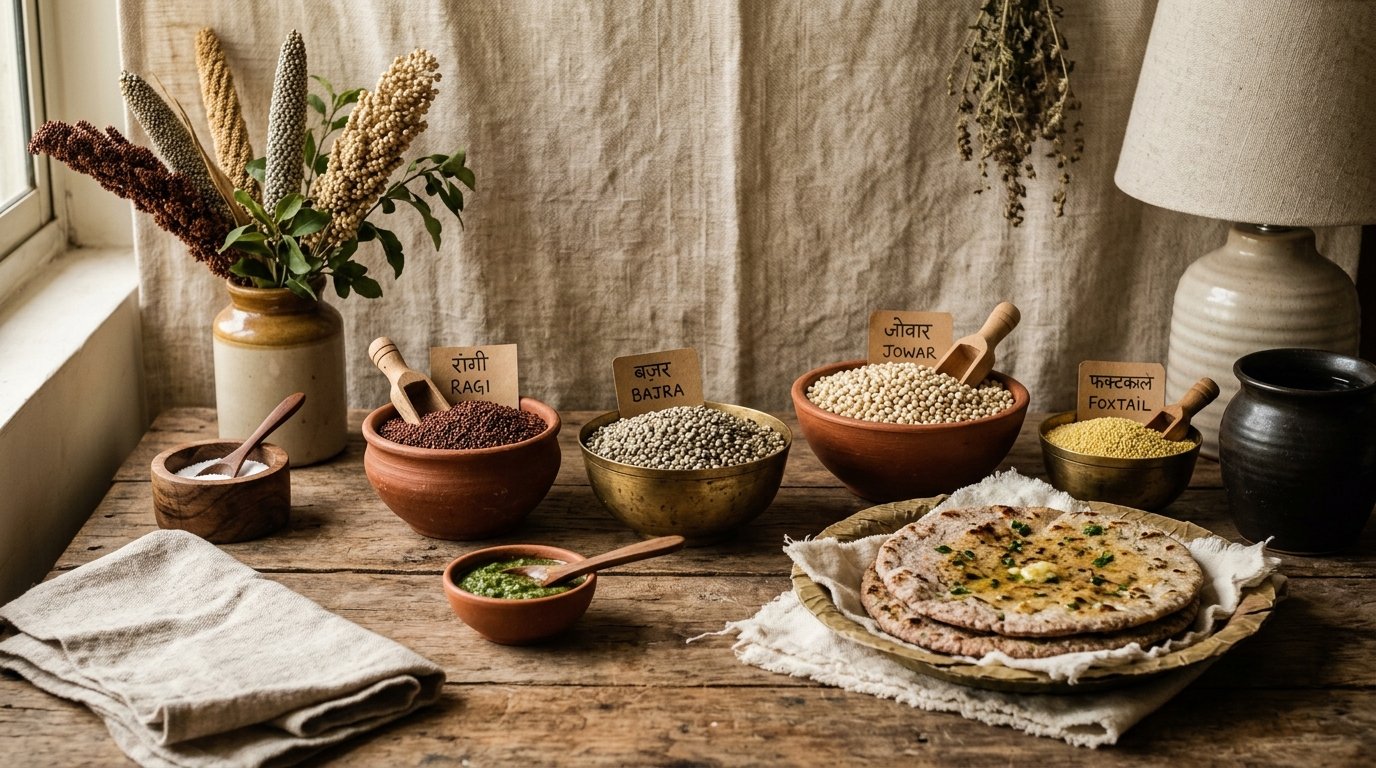
3. The Major Millets: Ragi, Jowar, and Bajra
The three most widely cultivated and readily available major millets in India each possess distinct seasonal and therapeutic benefits:
1. Finger Millet (Ragi / Mandua)
- Key Characteristic: Unmatched bone-density support due to its massive calcium concentration (344 mg/100g).
- Bioactive Compounds: Loaded with polyphenols, particularly ferulic acid and tannins, which exhibit strong antioxidant capacity.
- Best Used For: Post-workout recovery porridge, fermented dosa batters, and diabetic morning roti.
- Seasonality: Neutral thermal property; suitable year-round when cooked with cooling spices like cumin and coriander.
2. Sorghum (Jowar / Cholam)
- Key Characteristic: Neutral, mild flavor closely mimicking wheat, making it the easiest grain transition for beginners.
- Bioactive Compounds: Rich in 3-deoxyanthocyanins, rare plant pigments that protect vascular endothelial tissue from oxidative stress.
- Best Used For: Soft rotis, bhakri, and gluten-free flatbreads.
- Seasonality: Cooling grain; exceptional for summer consumption, aiding internal hydration and soothing digestive inflammation.
3. Pearl Millet (Bajra / Kambu)
- Key Characteristic: High iron density (8.0 mg/100g), making it ideal for combating nutritional anemia.
- Bioactive Compounds: High concentration of prebiotic beta-glucan and insoluble lignans.
- Best Used For: Hearty winter flatbreads (Bajra Roti), khichdi, and slow-cooked winter porridges.
- Seasonality: Warming grain (Ushna virya); ideal during autumn and winter months, providing thermogenic warmth and sustained energy.
4. The Minor Millets: Foxtail, Kodo, Little, Barnyard & Proso
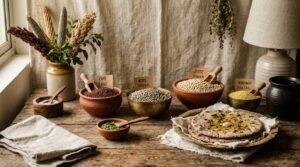
While major millets are typically milled into flour for flatbreads, minor millets retain their whole-grain kernel structure after gentle dehulling, serving as the ultimate 1:1 grain substitute for polished rice:
Minor Millets (The Whole-Grain Rice Substitutes):
Foxtail (Kangni) | Barnyard (Sanwa) | Kodo (Kodon) | Little (Kutki) | Proso (Chena)
- Barnyard Millet (Sanwa / Kuthiraivali):
- Lowest Glycemic Load: Has the lowest carbohydrate content and slowest digestibility of all cereal grains. Outstanding for prediabetes and visceral fat reduction.
- Foxtail Millet (Kangni / Tenai):
- Nerve & Muscle Function: High in thiamine (Vitamin B1) and amino acids like leucine and isoleucine, supporting nerve conduction and lean muscle synthesis.
- Kodo Millet (Kodon / Varagu):
- Metabolic Cleanser: Exceptionally high in free radical-scavenging polyphenols. Clinical trials show significant reductions in fasting blood glucose and postprandial insulin surges.
- Little Millet (Kutki / Samai):
- Digestive Ease: Extremely light on the digestive tract; ideal for convalescence, fasting dishes, and evening khichdi recipes.
5. How Millets Accelerate Fat Loss and Satiety
Millets promote body fat reduction through distinct biochemical and physiological mechanisms:
1. Slow Gastric Emptying & Satiety Signaling
Unlike polished rice—which breaks down rapidly in the duodenum—the complex branched-chain amylopectin and insoluble dietary fiber in millets resist rapid enzymatic hydrolysis. Gastric emptying time is delayed by 40–60 minutes, sustaining the postprandial release of Cholecystokinin (CCK) and Glucagon-Like Peptide-1 (GLP-1) to eliminate mid-day sugar cravings.
2. Production of Short-Chain Fatty Acids (SCFAs)
Millet fibers serve as primary substrates for colonic anaerobic fermentation by beneficial gut bacteria (Faecalibacterium prausnitzii and Akkermansia muciniphila). This fermentation produces high concentrations of Acetate, Propionate, and Butyrate:
* Butyrate strengthens gut mucosal integrity, reducing lipopolysaccharide (LPS) leakage and systemic metabolic endotoxemia.
* Propionate travels to the liver via the portal vein, where it inhibits fatty acid synthesis and down-regulates de novo lipogenesis.
3. Non-Insulin Mediated Glycemic Stability
By providing a flat, sustained glucose curve rather than a sharp spike and reactive crash, millets prevent hyperinsulinemia. Because circulating insulin remains low, hormone-sensitive lipase (HSL) remains active, allowing continuous access to stored adipose fat for beta-oxidation throughout the day.
6. Proper Preparation: De-phytinization, Soaking & Cooking Tips
Like all seeds and grains, raw millets contain natural anti-nutrients—predominantly phytic acid (phytates) and tannins—which can chelate dietary minerals (iron, zinc, calcium, magnesium), reducing their biological bioavailability.
The 3 Golden Rules of Millet Cooking
- Mandatory Soaking (De-phytinization):
- Always soak whole-grain minor millets (Foxtail, Kodo, Barnyard, Little) in room-temperature water for at least 6 to 8 hours before cooking. Soaking activates endogenous phytase enzymes, which cleave phytic acid bonds, freeing bound minerals and easing digestion.
- The Ideal Water-to-Millet Ratio:
- For fluffy, separate rice-like grains: Use 1 : 2.5 (1 cup soaked millet to 2.5 cups water).
- For soft porridges and khichdi: Use 1 : 4 (1 cup soaked millet to 4 cups water).
- Open Pot vs Pressure Cooking:
- While pressure cooking is convenient, simmering millets in an open earthen or stainless-steel pot over medium-low heat allows optimal gelatinization of starches without making the grain sticky or mushy.
7. 7 Delicious, Modern Millet Recipes for Weight Loss
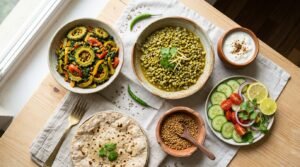
1. Foxtail Millet & Sprouted Moong Khichdi
- Ingredients: 1/2 cup soaked Foxtail Millet, 1/2 cup Sprouted Green Moong, 1 tsp cumin seeds, 1 pinch asafoetida (hing), 1 chopped tomato, 1/2 tsp turmeric, 1 tsp cold-pressed ghee, fresh ginger.
- Method: Saute cumin, ginger, and hing in ghee. Add chopped tomatoes, turmeric, and salt. Add drained foxtail millet and sprouted moong. Add 3.5 cups of water. Pressure cook for 3 whistles on medium flame. Garnish with fresh coriander.
2. High-Calcium Ragi Vegetable Cheela
- Ingredients: 1 cup Ragi flour, 2 tbsp Besan, 1 finely grated carrot, 1/2 cup chopped spinach, green chilies, cumin powder, warm water.
- Method: Whisk flours, vegetables, and spices with warm water into a smooth, pourable batter. Rest for 10 minutes. Pour onto a seasoned cast-iron skillet, drizzle a few drops of mustard oil, and cook until crisp on both sides. Serve with mint chutney.
3. Cooling Summer Jowar Buttermilk Porridge (Ambali)
- Ingredients: 3 tbsp Jowar flour, 1.5 cups water, 1 cup thin fresh buttermilk (chaas), roasted cumin powder, curry leaves, pink salt.
- Method: Mix jowar flour in water without lumps; cook on low heat until thick and glossy. Allow to cool completely. Whisk in buttermilk, salt, roasted cumin, and torn curry leaves. Drink chilled for instant heat relief and gut soothing.
4. Barnyard Millet Lemon Rice Style
- Ingredients: 1 cup cooked and cooled Barnyard Millet, 1 tsp mustard seeds, 1 tbsp roasted peanuts, 1 green chili, 1/2 tsp turmeric, juice of 1 lemon, curry leaves.
- Method: Temper mustard seeds, peanuts, green chilies, and curry leaves in 1 tsp sesame oil. Turn off heat, stir in lemon juice and turmeric. Gently fold in the cooled barnyard millet grains without breaking them.
5. Pearl Millet (Bajra) & Methi Thalipeeth
- Ingredients: 1 cup Bajra flour, 1/2 cup fresh chopped fenugreek (methi) leaves, 1 tbsp flaxseed powder, 1/2 tsp carom seeds (ajwain), warm water.
- Method: Knead ingredients into a soft dough using warm water. Pat down portions by hand onto parchment paper or a wet cloth into thin discs. Transfer to a hot griddle and cook until golden brown.
6. Little Millet Vegetable Pulao
- Ingredients: 1 cup soaked Little Millet, 1 cup mixed diced vegetables (beans, carrots, green peas), whole spices (bay leaf, clove, cinnamon, cardamom), 1 tsp cold-pressed oil.
- Method: Saute whole spices and onions in oil. Add vegetables and drained little millet. Add 2.25 cups of vegetable broth or water. Cover and cook on low heat for 12 minutes until all moisture is absorbed. Rest for 5 minutes before fluffing with a fork.
7. Sprouted Kodo Millet & Paneer Salad
- Ingredients: 1 cup cooked Kodo Millet (chilled), 100g raw diced paneer or baked tofu, diced cucumbers, cherry tomatoes, chopped mint, lemon-olive oil vinaigrette.
- Method: Toss chilled kodo millet with diced vegetables, paneer cubes, and fresh herbs. Drizzle with extra virgin olive oil, lemon juice, roasted cumin, and black pepper.
8. Managing Thyroid & Goitrogen Concerns with Millets
A common question among health-conscious individuals is whether millets interfere with thyroid function.
- The Scientific Fact: Pearl Millet (Bajra) contains C-glycosylflavones (vitexin, isovitexin), which can inhibit the action of thyroid peroxidase (TPO) in laboratory models when consumed in massive quantities alongside severe iodine deficiency.
- How to Safely Consume Millets with Hypothyroidism:
- Cook Thoroughly: Heat and cooking significantly deactivate polyphenol-based goitrogens. Never consume raw millet flour or uncooked sprouts.
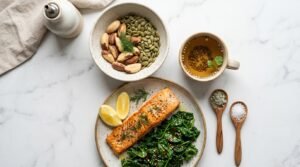
- Ensure Adequate Dietary Iodine & Selenium: Ensure your salt is iodized and consume selenium-rich foods (such as 1 Brazil nut daily, sunflower seeds, or eggs).
- Rotate Your Grains: Do not consume pearl millet exclusively every single day. Rotate between Jowar, Ragi, Foxtail, and Barnyard millets. Sorghum (Jowar) and Finger Millet (Ragi) carry zero clinical goitrogenic risk.
9. Frequently Asked Questions (FAQs)
Are millets completely gluten-free?
Yes. All true millets (Ragi, Jowar, Bajra, Foxtail, Barnyard, Kodo, Little, Proso) are botanically distinct from the Triticeae tribe of grasses (wheat, barley, rye) and are 100% naturally gluten-free. They are completely safe for individuals with Celiac Disease or Non-Celiac Gluten Sensitivity.
Can millets cause gas, bloating, or constipation?
If an individual transitions abruptly from a low-fiber polished white rice diet to 100% millet meals, the sudden influx of insoluble fiber and resistant starches can cause temporary flatulence and digestive discomfort. The Solution: Increase millet consumption gradually, soak all whole millets for 8 hours prior to cooking, and drink at least 2.5 to 3 liters of water daily to assist fiber transit through the digestive tract.
Which millet is best for rapid belly fat reduction?
Barnyard Millet (Sanwa) and Foxtail Millet (Kangni) are clinically regarded as the most effective for fat reduction due to their exceptionally low glycemic index (< 50), highest fiber-to-carbohydrate ratios, and high concentrations of resistant starches that accelerate liver fat breakdown.
10. Scientific References & Clinical Disclaimer
- Saleh, A. S., et al. (2013). “Millet grains: nutritional quality, processing, and potential health benefits.” Comprehensive Reviews in Food Science and Food Safety, 12(3), 281-295.
- Anitha, S., et al. (2021). “Can millets be an effective solution for diabetes? A systematic review and meta-analysis of 19 intervention studies.” Frontiers in Nutrition, 8, 687428.
- Gowda, N. A., et al. (2022). “Nutritional and health benefits of millets: An overview.” Journal of Food Science and Technology, 59(12), 4621-4632.
- Devi, P. B., et al. (2014). “Health benefits of finger millet (Eleusine coracana L.) polyphenols and dietary fiber: a review.” Journal of Food Science and Technology, 51(6), 1021-1040.
Medical Disclaimer: The content published in this guide is designed solely for educational, nutritional, and general culinary informational purposes. It is not intended to serve as personalized medical advice, dietary diagnosis, or therapeutic prescription. Individuals diagnosed with existing endocrine disorders, including overt hypothyroidism, Hashimoto’s thyroiditis, or inflammatory bowel disease (IBD), should coordinate with their endocrinologist or clinical dietitian to structure an individualized grain rotation program.