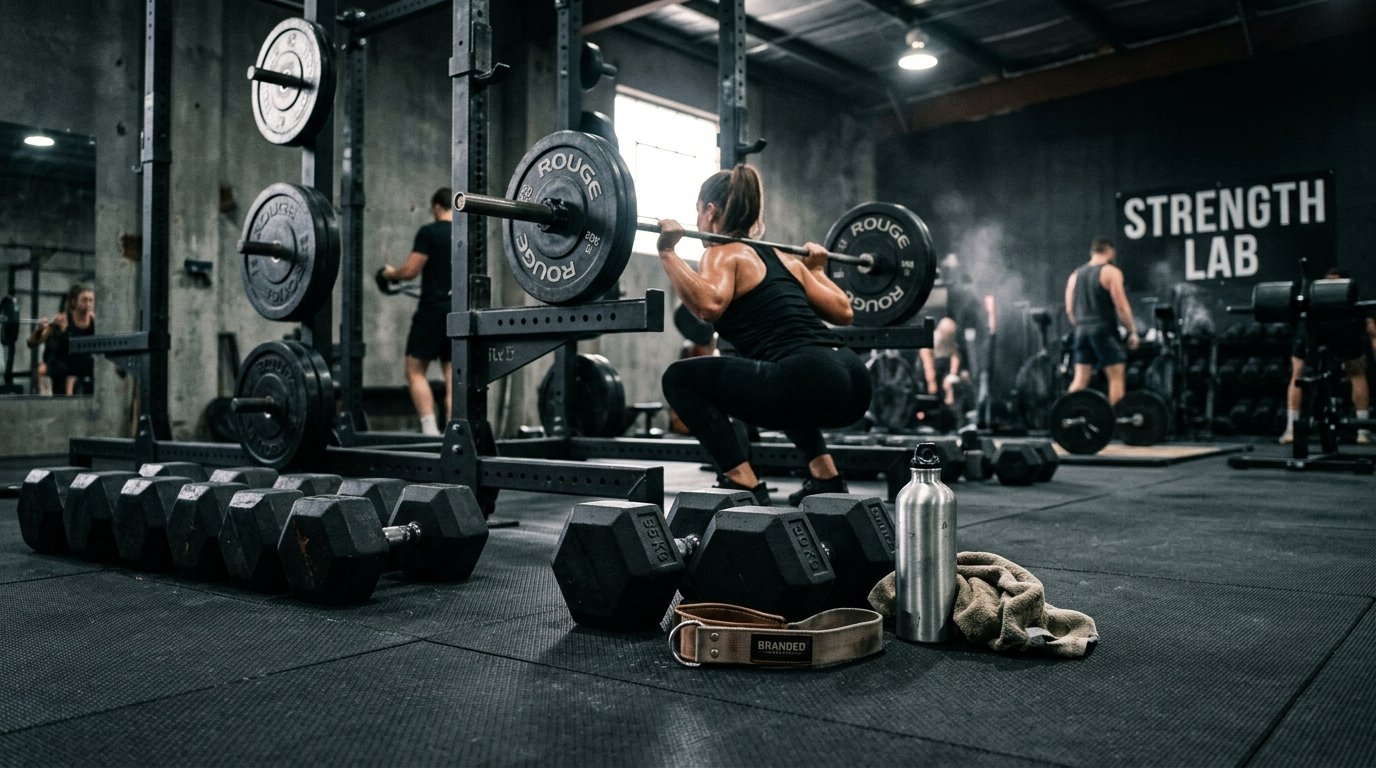
1. Introduction: Overcoming Sarcopenia and Low Muscle Mass in India
Starting strength training for beginners India routines is the single most effective way to eliminate the prevalent ‘skinny-fat’ body composition and supercharge metabolism.
Across South Asian populations, an unrecognized public health crisis exists: severe sarcopenia (premature age-related loss of skeletal muscle mass and strength). Anthropometric data reveals that compared to Caucasian and African populations of matched body weight, South Asians possess significantly lower lean skeletal muscle mass and higher proportional body fat.
This physiological profile—often termed the “Thin-Fat” or “Skinny-Fat” phenotype—predisposes millions of Indians to early insulin resistance, Type 2 Diabetes, visceral abdominal adiposity, and poor postural integrity. Skeletal muscle is not merely for aesthetics; it is the primary metabolic reservoir of the human body, accounting for over 80% of all postprandial glucose clearance.
For decades, fitness in India has been narrowly equated with chronic cardiovascular exercise (e.g., morning walking, cycling, or treadmill jogging). While aerobic exercise supports cardiorespiratory fitness, it does not stimulate muscle hypertrophy. Strength training (resistance training) is the only non-pharmacological stimulus capable of reversing muscle wasting, boosting resting metabolic rate, strengthening bone mineral density, and transforming body composition.
2. The Science of Muscle Hypertrophy & Mechanical Tension
To build lean muscle mass efficiently, you must understand the cellular triggers of muscle growth (hypertrophy). Muscle does not grow while lifting weights in the gym; the gym provides the micro-trauma stimulus, and the body repairs the muscle thicker and stronger during recovery:
Mechanical Tension ➔ Intracellular Signaling (mTORC1 Pathway) ➔ Muscle Protein Synthesis (MPS) > Muscle Protein Breakdown (MPB) ➔ Hypertrophy & Strength Gains
The Three Drivers of Hypertrophy
- Mechanical Tension (The King of Hypertrophy):
- Produced when a muscle contracts against an external load through a full range of motion. Mechanical tension physically stretches muscle fibers, activating mechanosensors that switch on the mTOR (mammalian target of rapamycin) molecular signaling cascade.
- Muscle Damage:
- Microscopic tears within sarcomere z-discs, primarily induced during the eccentric (lowering) phase of an exercise. This damage stimulates satellite cells to donate nuclei to repairing muscle fibers.
- Metabolic Stress:
- The accumulation of metabolic byproducts (lactate, hydrogen ions, inorganic phosphate) resulting in the cellular “pump.” This causes cell swelling, temporarily depriving the muscle of oxygen (hypoxia), which triggers anabolic hormone release.
3. The Golden Principle: Progressive Overload Explained
The single most common mistake made by gym beginners is performing the exact same exercises with the exact same weights and repetitions week after week. Without an adaptive demand, your body has zero physiological incentive to build new muscle tissue:
$$\text{Progressive Overload} = \text{Gradually increasing the physiological demands on the musculoskeletal system over time.}$$
How to Progressively Overload:
1. Increase Resistance (Load): Lifting 20 kg instead of 18 kg for the same reps.
2. Increase Volume (Reps / Sets): Performing 10 reps instead of 8 reps with the same weight.
3. Improve Execution & Tempo: Slowing down the eccentric phase (3 seconds down) with pristine form.
4. Reduce Rest Intervals: Completing the same workload in less time with equal technical proficiency.
Golden Rule for Beginners: Add 1 repetition per set or 1–2 kg to the bar/dumbbell every 1 to 2 weeks while maintaining strict, uncompromised form.
4. The 5 Foundational Compound Movements
Beginners should build 80% of their training around multi-joint compound exercises. Compound movements recruit the largest muscle groups simultaneously, trigger maximal neuroendocrine response, and teach systemic stability:
1. The Squat (Knee-Dominant Pattern)
- Target Muscles: Quadriceps, glutes, adductors, core, erectores spinae.
- Beginner Variations: Goblet Squat (holding a dumbbell at chest level) ➔ Barbell Box Squat ➔ Barbell Back Squat.
- Form Cues: Feet shoulder-width apart, toes flared out 15–30 degrees. Initiate movement by breaking at the hips and knees simultaneously. Keep chest proud, drive knees outward over toes, and descend until hip crease is parallel with knee joint.
2. The Hip Hinge / Deadlift (Posterior Chain Dominant)
- Target Muscles: Hamstrings, gluteus maximus, latissimus dorsi, spinal erectors, forearms.
- Beginner Variations: Romanian Deadlift (RDL) with Dumbbells ➔ Trap Bar Deadlift ➔ Conventional Barbell Deadlift.
- Form Cues: Soft bend in the knees; push hips directly backward as if trying to touch an imaginary wall behind you. Keep the weights gliding along your shins. Maintain a neutral cervical spine (do not crane neck upward). Squeeze glutes at the top without hyperextending the lower back.
3. The Horizontal Push (Chest & Shoulders)
- Target Muscles: Pectoralis major, anterior deltoids, triceps brachii.
- Beginner Variations: Incline Push-up ➔ Flat Dumbbell Chest Press ➔ Barbell Bench Press.
- Form Cues: Retract and depress shoulder blades (pinch shoulder blades together into the bench). Lower the dumbbells at a 45-degree angle to the torso (arrow shape, not a flared ‘T’ shape). Press up in a slight arc toward mid-chest.
4. The Horizontal & Vertical Pull (Upper Back & Lats)
- Target Muscles: Latissimus dorsi, rhomboids, trapezius, rear deltoids, biceps.
- Beginner Variations: Chest-Supported Dumbbell Row ➔ Lat Pulldown ➔ Inverted Bodyweight Row.
- Form Cues: Initiate the pull by retracting your shoulder blade first, then driving your elbows back toward your hip pockets. Avoid jerking or using lower back momentum.
5. The Overhead Vertical Press (Shoulders & Arms)
- Target Muscles: Medial and anterior deltoids, clavicular pectoralis, triceps, core.
- Beginner Variations: Seated Dumbbell Shoulder Press ➔ Standing Dumbbell Press ➔ Standing Barbell Overhead Press.
- Form Cues: Lock your core and squeeze glutes to prevent arching of the lumbar spine. Press the weights vertically overhead until arms are fully locked out with biceps aligned beside ears.
5. Gym vs Home Dumbbell Setup: Which is Best for You?
| Feature | Home Dumbbell Setup | Commercial Gym Membership |
|---|---|---|
| Convenience | Zero commute; train anytime in your living room | Requires travel; can be crowded during peak hours (6–8 AM / PM) |
| Equipment Variety | Limited to adjustable dumbbells and resistance bands | Access to barbells, squat racks, cables, and specialized machines |
| Loading Potential | Difficult to progress heavy lower-body compound lifts beyond 30 kg | Infinite micro-loading plates; optimal for long-term progressive overload |
| Best Suited For | Absolute beginners, busy corporate professionals, homemakers | Intermediate lifters, those targeting maximal hypertrophy and power |
Verdict: You can achieve remarkable physique transformation and strength gains for the first 6–12 months entirely at home with a pair of adjustable dumbbells (5–25 kg) and an adjustable bench. Eventually, transition to a gym to access barbells and heavy cable machines.
6. Beginner 3-Day & 4-Day Weekly Workout Splits
For natural beginners, training each muscle group twice per week yields far superior muscle protein synthesis compared to traditional single-body-part “bro splits” (e.g., chest on Monday, back on Tuesday).
Option A: 3-Day Full Body Split (Ideal for Busy Schedules)
- Frequency: Monday, Wednesday, Friday (Rest days on Tue, Thu, Sat, Sun).
Workout A (Monday)
- Goblet Squat (Dumbbell): 3 sets x 8–10 reps (2 min rest)
- Flat Dumbbell Bench Press: 3 sets x 8–10 reps (90 sec rest)
- Chest-Supported Dumbbell Row: 3 sets x 10–12 reps (90 sec rest)
- Dumbbell Romanian Deadlift (RDL): 3 sets x 10 reps (90 sec rest)
- Plank Hold: 3 sets x 45–60 seconds (60 sec rest)
Workout B (Wednesday)
- Trap Bar or Dumbbell Deadlift: 3 sets x 6–8 reps (2 min rest)
- Standing Dumbbell Overhead Shoulder Press: 3 sets x 8–10 reps (90 sec rest)
- Lat Pulldown (or Band-Assisted Pull-ups): 3 sets x 10–12 reps (90 sec rest)
- Walking Lunges (Dumbbells): 3 sets x 10 steps per leg (90 sec rest)
- Standing Dumbbell Bicep Curl superset with Tricep Pushdown: 3 sets x 12 reps each
Workout C (Friday)
- Leg Press (or Bulagarian Split Squat): 3 sets x 10–12 reps (90 sec rest)
- Incline Dumbbell Press: 3 sets x 8–10 reps (90 sec rest)
- Seated Cable Row: 3 sets x 10–12 reps (90 sec rest)
- Lying Leg Curl (or Swiss Ball Hamstring Curls): 3 sets x 12–15 reps (60 sec rest)
- Hanging Knee Raises (or Reverse Crunches): 3 sets x 12–15 reps (60 sec rest)
Option B: 4-Day Upper / Lower Split
- Frequency: Mon (Upper A), Tue (Lower A), Thu (Upper B), Fri (Lower B).
- Allows greater per-session training volume for targeted muscle groups while preserving 72 hours of recovery between identical muscle sessions.
7. Warm-Up, Mobility & Injury Prevention Protocols
Never perform heavy working sets with “cold” muscle tissue. An evidence-based warm-up protocol takes only 8–10 minutes:
Warm-Up Pyramid:
General Thermogenic (3 min light cardio) ➔ Dynamic Mobility (Thoracic spine, hip openers, shoulder dislocates) ➔ Movement-Specific Warm-up Sets (Empty bar / 50% load)
Essential Warm-Up Drills
- Cat-Cow & Bird-Dog: 10 reps each to mobilize lumbar spine and activate multifidus and transverse abdominis core muscles.
- World’s Greatest Stretch: Opens hip flexors, hamstrings, and thoracic rotational mobility.
- Band Pull-Aparts & Face Pulls: 2 sets of 15 reps to fire up the rotator cuff, infraspinatus, and middle trapezius before pressing.
- Pyramiding Warm-Up Sets:
- Set 1: 50% of working weight for 8 reps (warm-up)
- Set 2: 70% of working weight for 4 reps (warm-up)
- Working Sets: 100% of target weight with maximal intent.
8. Nutrition & Recovery: Fueling Hypertrophy on an Indian Diet
Resistance training without adequate nutritional substrate results in net muscle protein breakdown. For optimal muscle protein synthesis (MPS):
- Daily Protein Requirement:
- Target 1.6 to 2.2 grams of protein per kilogram of body weight daily. (For a 70 kg individual: ~115–140g protein daily).
- Top Indian Sources: Low-fat paneer, extra-firm tofu, tempeh, Greek yogurt (hung curd), whey protein isolate, sprouted lentils, eggs, and chicken breast.
- Pre-Workout Fueling:
- 60–90 minutes prior to lifting: Consume easily digestible complex carbohydrates and modest protein (e.g., 1 banana with 1 tbsp peanut butter, or 1 cup curd with fruit, or a slice of whole grain toast with 2 boiled egg whites).
- Post-Workout Anabolic Window:
- Within 2 hours post-workout: Consume 25–35 grams of high-quality protein providing at least 2.7 to 3.0 grams of Leucine (the branched-chain amino acid trigger that activates mTOR).
- Sleep Architecture:
- Over 70% of daily Human Growth Hormone (HGH) is secreted during Stage 3 Slow-Wave Deep Sleep. Aim for 7.5 to 8.5 hours of uninterrupted sleep nightly.
9. Frequently Asked Questions (FAQs)
Will lifting heavy weights make Indian women bulky?
No. Female physiology produces approximately 15 to 20 times less endogenous testosterone than males. Women do not have the hormonal milieu to develop massive hyper-muscular bulk naturally without exogenous anabolic steroids. Strength training creates a firm, athletic, sculpted physique, burns stubborn visceral fat, and enhances metabolic health.
How many days a week should an absolute beginner train?
3 days per week (Full Body) is the scientific sweet spot for beginners. It provides 48 hours of complete recovery between sessions, perfectly balances volume and frequency, and prevents central nervous system (CNS) burnout.
Should I do cardio before or after lifting weights?
Always perform weight training first, when your glycogen stores and neuromuscular coordination are at their peak. Performing intense cardio before weights depletes ATP, pre-exhausts stabilizing muscles, and significantly elevates injury risk on compound movements. Keep cardio for after your lifting session or on designated rest days.
10. Scientific References & Clinical Disclaimer
- Schoenfeld, B. J. (2010). “The mechanisms of muscle hypertrophy and their application to resistance training.” The Journal of Strength & Conditioning Research, 24(10), 2857-2872.
- Morton, R. W., et al. (2018). “A systematic review, meta-analysis and meta-regression of the effect of protein supplementation on resistance training-induced gains in muscle mass and strength in healthy adults.” British Journal of Sports Medicine, 52(6), 376-384.
- Misra, A., & Khurana, L. (2011). “Obesity and the metabolic syndrome in developing countries.” The Journal of Clinical Endocrinology & Metabolism, 93(11_supplement_1), s9-s30.
- Westcott, W. L. (2012). “Resistance training is medicine: effects of strength training on health.” Current Sports Medicine Reports, 11(4), 209-216.
Medical Disclaimer: The information presented in this guide is intended solely for educational, athletic, and general fitness reference purposes. It does not constitute medical, orthopedic, or physical therapy advice. Before initiating a new high-load resistance training program, individuals with pre-existing cardiovascular conditions, spinal disk herniations, joint pathology, or hypertension must consult a physician and work with a certified strength and conditioning coach to ensure correct biomechanics.