1. Introduction: The South Asian Heart Paradox & Dyslipidemia
Adopting an evidence-based cholesterol lowering Indian diet is one of the most lifesaving health interventions an individual of South Asian origin can undertake. Clinical epidemiological studies from the World Health Organization (WHO) and the Indian Council of Medical Research (ICMR) demonstrate that individuals from India experience coronary artery disease (CAD) roughly a decade earlier than Western populations, often despite maintaining lower overall body mass index (BMI) figures.
South Asian Phenotype: Normal/Lean BMI + High Visceral Adiposity + High Small Dense LDL + Low HDL + High Triglycerides = Atherogenic Dyslipidemia
This phenomenon—often termed the South Asian Heart Paradox—is driven predominantly by atherogenic dyslipidemia. Unlike typical hypercholesterolemia where large, buoyant LDL particles circulate, South Asians frequently present with elevated levels of small, dense Low-Density Lipoprotein (sdLDL), low High-Density Lipoprotein (HDL-C), and high circulating fasting triglycerides.
Small, dense LDL particles easily penetrate the endothelial lining of arterial walls, undergo rapid oxidation, and initiate calcified plaque buildup (atherosclerosis). Fortunately, scientific nutritional medicine demonstrates that modifying your macronutrient quality, swapping refined cooking fats, and flooding your meals with viscous soluble fibers can dramatically reduce dangerous LDL levels, elevate protective HDL, and reverse arterial inflammation naturally.
2. Decoding Your Lipid Profile: Total Cholesterol, LDL-C, HDL-C, and Triglycerides
Before structuring your daily meals, you must clearly understand how clinical blood lipid markers correlate with cardiovascular risk:
| Lipid Parameter | Ideal Target Range | Borderline High | High Risk Threshold | Clinical Significance |
|---|---|---|---|---|
| Total Cholesterol | < 200 mg/dL | 200 – 239 mg/dL | ≥ 240 mg/dL | Overall measurement of cholesterol in circulating lipoproteins. |
| LDL-C (“Bad”) | < 100 mg/dL (or <70 if high risk) | 100 – 159 mg/dL | ≥ 160 mg/dL | Transports cholesterol into arterial intima; primary driver of atherosclerosis. |
| HDL-C (“Good”) | > 40 mg/dL (Men), > 50 mg/dL (Women) | 40 – 49 mg/dL | < 40 mg/dL | Performs reverse cholesterol transport, shuttling lipids back to liver. |
| Triglycerides | < 150 mg/dL | 150 – 199 mg/dL | ≥ 200 mg/dL | Fat molecules circulating in bloodstream, strongly driven by refined sugar & carbs. |
| Non-HDL Cholesterol | < 130 mg/dL | 130 – 159 mg/dL | ≥ 160 mg/dL | Total cholesterol minus HDL; measures all atherogenic particles including VLDL. |
Rather than focusing solely on total cholesterol, modern preventative cardiologists emphasize the Triglyceride-to-HDL ratio (ideal: < 2.0) and Apolipoprotein B (ApoB) as the gold-standard predictors of cardiovascular plaque risk.
3. The Core Philosophy of a Cholesterol Lowering Indian Diet
A sustainable cholesterol lowering Indian diet does not require you to starve or live on bland, unseasoned boiled greens. Authentic Indian culinary traditions are packed with cardioprotective spices, antioxidant herbs, and nutrient-dense legumes.
The true dietary problem in modern urban India is not traditional food itself, but rather the excessive consumption of re-heated commercial seed oils, ultra-processed refined flours (maida), hidden trans fats in sweets (halwai vanaspati/dalda), and sedentary carb loading.
Modern Indian Diet Pitfall: Re-heated Refined Oils + Vanaspati Dalda + Refined Wheat Maida ➔ High Hepatic VLDL Output ➔ Elevated sdLDL & Systemic Endothelial Oxidation
Our therapeutic strategy rests on three pillars:
1. Binding Bile Acids in the Gut: Utilizing viscous soluble fibers (beta-glucan, psyllium, pectin) to bind cholesterol-rich bile acids in the small intestine, forcing the liver to consume circulating LDL to make new bile.
2. Upregulating Hepatic LDL Receptors: Increasing dietary monounsaturated fats (MUFA) and omega-3 fatty acids, which enhance the activity of cell-surface LDL receptors that clear lipids from blood.
3. Quenching Lipid Peroxidation: Flooding the vascular system with bioflavonoids from amla, garlic, and turmeric to prevent circulating LDL from oxidizing inside arterial walls.
4. 9 Clinically Proven Indian Foods That Drop LDL Cholesterol
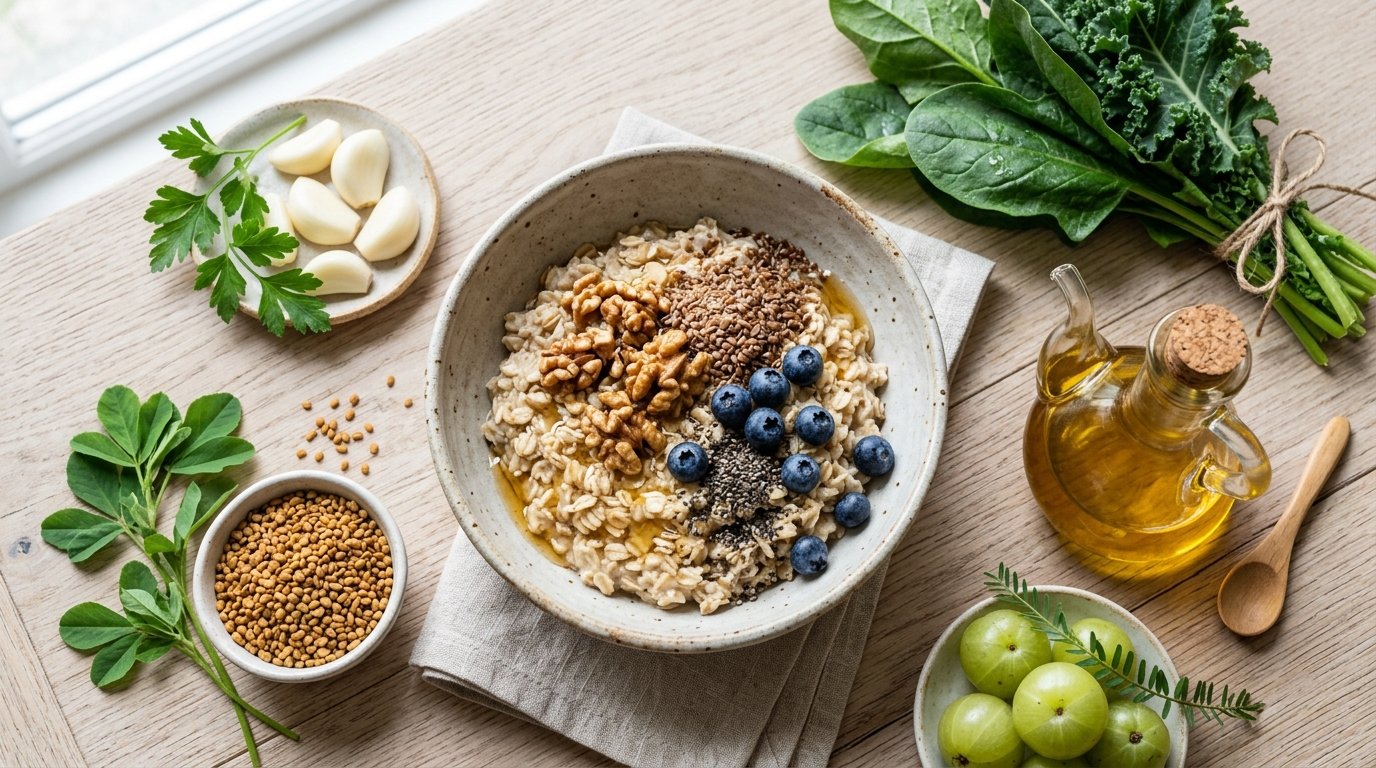
Integrating these 9 functional superfoods into your everyday cooking produces powerful lipid-lowering synergies:
Soluble Fibers & Sterols ➔ Ingestion ➔ Intestinal Entrapment of Dietary Cholesterol & Bile ➔ Hepatic LDL Receptors Upregulated ➔ Up to 15% Reduction in Serum LDL-C
1. Rolled Oats & Barley (Jau)
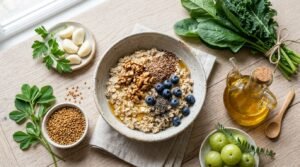
Oats and barley are the richest sources of beta-glucan, a soluble gelatinous fiber. In clinical trials published in the American Journal of Clinical Nutrition, consuming 3 grams of oat beta-glucan daily reduced total and LDL cholesterol by 7% to 10% within 4 weeks without altering beneficial HDL levels.
2. Isabgol (Psyllium Husk)
Psyllium husk is an authentic Indian powerhouse of viscous soluble fiber. Taking 5 to 7 grams of pure isabgol stirred in a glass of warm water 20 minutes before lunch forms an emollient gel in the digestive tract that traps both dietary cholesterol and re-circulating bile acids.
3. Raw Indian Garlic (Lahsun)
Garlic contains allicin, an organosulfur compound that inhibits HMG-CoA reductase—the exact rate-limiting enzyme targeted by prescription statin medications. Consuming 1 to 2 freshly crushed raw garlic cloves in the morning (allowing 10 minutes of exposure to air for allicin formation) lowers serum cholesterol by 8% to 12%.
4. Fresh Amla (Indian Gooseberry)
Amla is nature’s most concentrated source of bioavailable vitamin C, tannins, and gallic acid. A landmark clinical trial published in the European Journal of Clinical Nutrition found that 500mg of raw amla powder taken daily for 28 days showed cholesterol-lowering efficacy comparable to low-dose simvastatin, significantly dropping LDL and C-reactive protein (CRP).
5. Methi Seeds (Fenugreek)
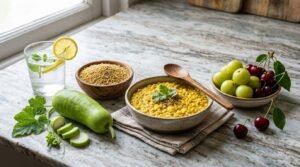
Fenugreek seeds are loaded with galactomannan and steroidal saponins. Saponins bind tightly to intestinal cholesterol molecules, preventing their uptake across the enterocyte membrane. Soaking 1 teaspoon of methi seeds in warm water overnight and drinking both the water and seeds in the morning helps lower fasting triglycerides and blood glucose simultaneously, as detailed in our guide on diabetes-friendly Indian nutrition.
6. Walnuts & Soaked Almonds
Tree nuts are rich in plant sterols (phytosterols), alpha-linolenic acid (plant-based omega-3), and L-arginine, which supports arterial nitric oxide production. Eating 4 soaked almonds and 2 whole walnuts daily improves endothelial elasticity and reduces systemic oxidation of LDL particles.
7. Ancient Indian Millets (Foxtail, Ragi, Barnyard)
Swapping polished white rice for high-fiber millets like foxtail and barnyard provides slow-digesting resistant starch. These millets ferment in the colon into Short-Chain Fatty Acids (SCFAs) like propionate, which travels directly via the portal vein to the liver to suppress endogenous cholesterol synthesis.
8. Flaxseeds (Alsi)
Cold-milled flaxseeds provide high concentrations of secoisolariciresinol diglucoside (SDG) lignans and soluble mucilage fiber. Two tablespoons of ground flaxseeds added to your morning daliya or whole wheat dough (atta) significantly suppresses total cholesterol and blood pressure.
9. Green Tea with High EGCG
Epigallocatechin gallate (EGCG) in green tea exerts potent antioxidant actions, preserving vascular endothelial function and shielding circulating LDL particles from inflammatory oxidation.
5. The Cooking Oil Conundrum: Mustard Oil, Desi Ghee vs Refined Vegetable Oils
Nothing causes more confusion in an Indian household than selecting cooking oils. Let’s analyze the clinical reality of traditional vs modern cooking fats:
Cold-Pressed Mustard / Til / Olive Oil (Rich in MUFA + Omega-3) ➔ Anti-Inflammatory, Heart Protective
VS
Refined Seed Oils Re-Heated in Kadhais ➔ Generates Toxic Aldehydes & Trans Fats ➔ Destroys Endothelium
The Truth About Refined Seed Oils (Sunflower, Soybean, Corn)
Refined oils undergo heavy industrial processing, including chemical solvent extraction (hexane), bleaching, and high-heat deodorization. They are predominantly high in pro-inflammatory Omega-6 fatty acids (Linoleic Acid). When heated repeatedly in home kadhais or street food fryers, they produce cytotoxic lipid peroxides and aldehydes that cause vascular endothelial inflammation.
The Power of Kachi Ghani Mustard Oil (Sarson ka Tel)
Cold-pressed mustard oil has been used in northern and eastern India for centuries. It contains an ideal balance of Monounsaturated Fatty Acids (MUFA ~60%), low saturated fats (<12%), and a favorable Omega-6 to Omega-3 ratio (~1.2:1). Furthermore, alpha-linolenic acid (ALA) in mustard oil protects against ventricular arrhythmias.
What About Pure Desi Cow Ghee?
Pure desi cow ghee prepared via the traditional bilona method contains conjugated linoleic acid (CLA) and butyric acid. However, ghee is still approximately 60% to 65% saturated fat. For healthy individuals, 1 to 2 teaspoons (5-10ml) daily is harmless. But for patients diagnosed with existing elevated LDL-C (>130 mg/dL) or coronary plaques, saturated fat should be kept under 6% of total calories, meaning ghee must be strictly restricted.
6. 7-Day Heart-Healthy Cholesterol Lowering Indian Meal Plan
This 7-day culinary blueprint incorporates high-fiber grains, cardioprotective spices, plant sterols, and healthy MUFA cooking fats.
Day 1 (Monday)
- Early Morning (7:00 AM): 1 glass warm water with 1 tsp soaked methi seeds + 1 crushed raw garlic clove.
- Breakfast (8:30 AM): 1 warm bowl of rolled oats cooked in water and skimmed milk, topped with 1 tbsp ground flaxseeds and 2 chopped walnuts.
- Mid-Morning (11:00 AM): 1 fresh amla juice shot (30ml) diluted in 150ml water + 1 cup green tea.
- Lunch (1:30 PM): 2 whole wheat phulkas, 1 cup yellow moong dal, 1 cup bhindi (okra) cooked in 1 tsp mustard oil, and a large bowl of cucumber-radish salad.
- Evening Snack (5:00 PM): 1 cup roasted makhana lightly tossed with turmeric and black pepper + 1 cup black coffee.
- Dinner (8:00 PM): 1 bowl of vegetable foxtail millet khichdi made with carrots, French beans, and spinach + 1 cup homemade low-fat cow’s milk chaas.
Day 2 (Tuesday)
- Early Morning (7:00 AM): 1 glass warm lemon-cinnamon infusion.
- Breakfast (8:30 AM): 2 steamed ragi-vegetable idlis with fresh coriander-mint chutney (no coconut).
- Mid-Morning (11:00 AM): 1 medium sweet lime (mosambi) or 1 crisp green apple.
- Lunch (1:30 PM): 1 cup brown rice, 1 cup split toor dal with garlic tadka, 1 cup lauki sabzi, and shredded cabbage salad.
- Evening Snack (5:00 PM): 1 small bowl of boiled chana chaat with chopped onions, tomatoes, and lemon juice.
- Dinner (8:00 PM): 2 phulkas, 1 cup methi-tofu bhurji (100g non-GMO tofu), and 1 bowl of clear tomato-garlic soup.
Day 3 (Wednesday)
- Early Morning (7:00 AM): 1 glass warm water with 1 tbsp soaked chia seeds.
- Breakfast (8:30 AM): 2 small besan chillas loaded with finely chopped capsicum, onions, and coriander + mint chutney.
- Mid-Morning (11:00 AM): 1 small bowl of fresh papaya slices.
- Lunch (1:30 PM): 2 multigrain rotis (wheat + jau/barley flour), 1 cup masoor dal, 1 cup pumpkin (kaddu) sabzi, and fresh cucumber raita (made with skimmed curd).
- Evening Snack (5:00 PM): 4 soaked almonds + 1 cup antioxidant-rich green tea.
- Dinner (8:00 PM): 1 bowl of vegetable barley (jau) daliya cooked with zucchini, green peas, and ginger.
Day 4 (Thursday)
- Early Morning (7:00 AM): 1 glass warm water with 1 tbsp pure apple cider vinegar.
- Breakfast (8:30 AM): 1 medium bowl of vegetable poha with roasted peanuts and lemon juice.
- Mid-Morning (11:00 AM): 1 fresh tender coconut water.
- Lunch (1:30 PM): 2 phulkas, 1 cup rajma (kidney beans in light tomato-onion gravy), 1 cup steamed green beans sabzi, and raw onion rings with lemon.
- Evening Snack (5:00 PM): 1 bowl of puffed rice (murmura) tossed with roasted chana and diced tomatoes.
- Dinner (8:00 PM): 100g grilled or baked fish (like rohu or pomfret, rich in natural omega-3) OR 100g pan-seared paneer/tofu with sautéed bell peppers, broccoli, and mushrooms.
Day 5 (Friday)
- Early Morning (7:00 AM): 1 glass warm water with 1/2 tsp crushed ajwain and cumin seeds.
- Breakfast (8:30 AM): 1 bowl of savory sooji-vegetable upma with mustard seeds and curry leaves.
- Mid-Morning (11:00 AM): 1 medium fresh guava (high in pectin soluble fiber).
- Lunch (1:30 PM): 1 cup steamed parboiled rice, 1 cup chana dal cooked with bottle gourd (lauki chana dal), and 1 large bowl of mixed green salad with lemon dressing.
- Evening Snack (5:00 PM): 1 cup warm masala tea (prepared without dairy milk or sweetened with stevia).
- Dinner (8:00 PM): 2 jowar rotis, 1 cup palak (spinach) sabzi cooked with garlic, and 1 bowl of clear vegetable broth.
Day 6 (Saturday)
- Early Morning (7:00 AM): 1 glass lukewarm water + 1 crushed raw garlic clove.
- Breakfast (8:30 AM): 2 slices of 100% whole grain toast topped with sliced avocado (or 2 boiled egg whites) and cracked black pepper.
- Mid-Morning (11:00 AM): 1 glass of fresh pomegranate juice with seeds (rich in punicalagin polyphenols).
- Lunch (1:30 PM): 2 phulkas, 1 cup green moong dal, 1 cup tori (ridge gourd) sabzi, and 1/2 cup skimmed milk curd.
- Evening Snack (5:00 PM): 1 boiled corn on the cob sprinkled with chaat masala and lemon.
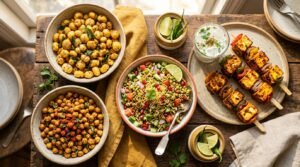
- Dinner (8:00 PM): 1 large bowl of Mediterranean-inspired Indian chickpea salad (boiled kabuli chana, cucumber, bell peppers, extra virgin olive oil, and lemon juice).
Day 7 (Sunday)
- Early Morning (7:00 AM): 1 cup warm coriander seed infusion.
- Breakfast (8:30 AM): 1 whole wheat stuffed methi paratha (prepared on an iron tawa with minimal oil brushing) + 1 cup low-fat curd.
- Mid-Morning (11:00 AM): 1 fresh orange or sweet lime.
- Lunch (1:30 PM): 2 phulkas, 1 cup split toor dal with heeng-jeera tadka, 1 cup tinda sabzi, and a bowl of shredded carrot-beetroot salad.
- Evening Snack (5:00 PM): 1 cup roasted lotus seeds (makhana).
- Dinner (8:00 PM): 1 bowl of vegetable barnyard millet pulav + 1 cup cooling mint raita.
7. Cardio, Resistance Training, and Lifestyle Synergy
Diet alone is extraordinarily powerful, but pairing your cholesterol lowering Indian diet with progressive exercise creates complete cardiovascular defense:
Zone 2 Cardio + Progressive Resistance Training ➔ Activates Lipoprotein Lipase (LPL) ➔ Clears Circulating Triglycerides + Elevates Cardioprotective ApoA-1 (HDL)
- Zone 2 Aerobic Training: Performing 30 to 45 minutes of brisk walking, swimming, or cycling 5 days weekly activates lipoprotein lipase (LPL) in skeletal muscle capillary walls, accelerating the clearance of triglyceride-rich VLDL.
- Resistance Training: As outlined in our strength training beginner guide, lifting weights twice to three times per week increases insulin sensitivity in muscle cells, directly lowering hepatic fat accumulation and small dense LDL particles.
- Deep Restorative Sleep: Chronic sleep deprivation raises nighttime cortisol, driving hepatic cholesterol synthesis. Prioritize 7 to 8 hours of uninterrupted sleep as covered in our circadian health and sleep guide.
8. Common Indian Diet Mistakes That Secretly Spike Blood Lipids
Avoid these 4 common mistakes that sabotage your lipid profile:
– Consuming Commercial Bakery Biscuits & Rusk with Morning Chai: Almost all packaged bakery goods in India contain hydrogenated vegetable fat (vanaspati), the single most potent source of arterial trans-fatty acids.
– Reusing Frying Oil Multiple Times: Repeated heating and cooling of cooking oil creates polycyclic aromatic hydrocarbons and advanced lipid peroxides that damage arterial walls.
– Excessive Reliance on High-Carb Vegetarian Meals: Eating 4 to 5 large rotis or heaps of white rice with minimal protein causes rapid insulin spikes, stimulating the liver to turn excess glucose into triglycerides.
– Smoking and Passive Tobacco Smoke: Cigarette and bidi smoke directly inactivates lecithin-cholesterol acyltransferase (LCAT), crashing protective HDL levels.
9. Frequently Asked Questions (FAQs)
Q1: Can I eat eggs if I have high cholesterol?
Yes, but prioritize egg whites and moderate whole eggs. Dietary cholesterol in whole egg yolks has a relatively modest impact on blood cholesterol for 70% of people (hypo-responders). However, for individuals with familial hypercholesterolemia or existing coronary plaques, consuming 2 to 3 egg whites daily with a maximum of 3 to 4 whole eggs per week is the safest protocol.
Q2: How fast will this Indian diet lower my LDL cholesterol?
Adhering strictly to a high-soluble-fiber, low-saturated-fat Indian diet typically produces measurable drops in serum LDL within 4 to 6 weeks. Reductions of 15% to 25% in LDL and 20% to 35% in triglycerides are commonly achieved within 90 days.
Q3: Do I still need statins if I change my diet?
If your cardiologist has prescribed a statin based on documented coronary calcium scores (CAC), prior cardiac events, or high baseline LDL (>190 mg/dL), you should never stop medication without clinical supervision. A heart-healthy diet works synergistically with medical therapy to allow optimal dosing and reduce cardiovascular events.
10. Scientific References & Clinical Disclaimer
Key Peer-Reviewed References
- Enas, E. A., et al. (2007). Coronary Artery Disease in South Asians: A Clinical and Nutritional Perspective. Journal of the American College of Cardiology, 50(13), 1222-1232.
- Brown, L., et al. (1999). Cholesterol-Lowering Effects of Dietary Fiber: A Meta-Analysis of 67 Trials. American Journal of Clinical Nutrition, 69(1), 30-42.
- Upadya, H., et al. (2019). A Randomized, Double-Blind, Placebo-Controlled Clinical Study to Evaluate the Efficacy of an Amla Extract in Dyslipidemia. BMC Complementary Medicine and Therapies, 19(1), 27.
- Mach, F., et al. (2020). 2019 ESC/EAS Guidelines for the Management of Dyslipidaemias: Lipid Modification to Reduce Cardiovascular Risk. European Heart Journal, 41(1), 111-188.
Medical Disclaimer: The information presented in this comprehensive guide is intended strictly for educational and informational purposes. It does not replace individualized clinical advice, laboratory lipid panel interpretation, or medical prescriptions from a licensed physician or cardiologist. Always consult your healthcare provider before modifying prescribed cardiovascular or cholesterol-lowering medications.